
Iron Maiden (Official Thread)

Ar-Pharazon

Senior Member
Joined
Feb 28, 2013
Posts
1,549
Reaction score
601
I agree their 90s albums for the most part were pretty average. Although I liked the X Factor the rest were simply weak albums.

I think the two Blaze Bayley albums still had good performances, but were poorly written. Tons of repetitive lyrics that they never had with Bruce Bruce.

I couldn't listen to them nearly as much as albums from the other eras.

 

Unlimited Power

Junior Member
Joined
Apr 4, 2013
Posts
27
Reaction score
0
I actually prefer The X Factor over No Prayer For The Dying and Fear of The Dark. It's a much darker effort, and I wasn't bothered by Blaze's voice much if at all.
 

Riff Raff

Senior Member
Joined
Dec 8, 2010
Posts
20,958
Reaction score
11,089
Location
No
I think the two Blaze Bayley albums still had good performances, but were poorly written. Tons of repetitive lyrics that they never had with Bruce Bruce.

I couldn't listen to them nearly as much as albums from the other eras.
I agree both had good stuff on them but X Factor was a more consistent album for me. Virtual had maybe 3 good songs but the rest sucked.
I actually prefer The X Factor over No Prayer For The Dying and Fear of The Dark. It's a much darker effort, and I wasn't bothered by Blaze's voice much if at all.

Agreed, X Factor was far better for me than those 2 albums. Darker and didn't feel rushed like the 2 before it.
 

METALPRIEST

Senior Member
Joined
Nov 28, 2009
Posts
33,599
Reaction score
83
Location
U.S.A.
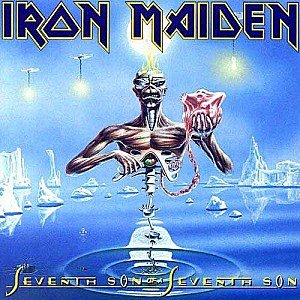
25 Years Ago: Iron Maiden’s ‘Seventh Son of a Seventh Son’ Released

seventh.jpg

SOURCE LINK


Capitol
For all the well-deserved success and glory enjoyed by Iron Maiden’s new millennium comeback, it’s been a long time since the British metal giants put out an album virtually all their fans could agree was stellar. That album was their semi-conceptual triumph, ‘Seventh Son of a Seventh Son,’ which was released on April 11, 1988.

Ever since the group’s 1980 eponymous LP had proclaimed the New Wave of British Heavy Metal’s arrival, followed closely by ’81’s fearsome ‘Killers,’ Maiden’s career had literally built from strength to strength. They accelerated towards worldwide success after the arrival of singer Bruce Dickinson, thanks to a remarkable streak of blockbuster metal albums in ‘82’s ‘The Number of the Beast,’ ’83’s ‘Piece of Mind’ and ‘84’s ‘Powerslave.’ It finally culminated in the decade-defining double live album that was ‘85’s ‘Live After Death.’

And then the unthinkable happened: Iron Maiden stumbled.

1986’s futuristically themed ‘Somewhere in Time,’ when it emerged, was clearly the work of a band fried to a crisp under the sizzling lights of this grueling half-decade’s worth of album-tour-album-tour cycles. While it sold somewhat consistently with its predecessors based on sheer momentum and guitarist Adrian Smith’s difference-making hit, ‘Wasted Years,’ critics and cynics alike greedily got their knives out to skewer the band.

So when time came to get to work on Maiden’s seventh studio album, even the band’s ever-confident bassist and leader, Steve Harris, was probably feeling some heat to deliver another unqualified heavy metal triumph, because he turned to Dickinson and Smith to collaborate on their new compositions like never before, churning out a slew of powerful anthems loosely based around the seventh son folklore that proved inspired, infectious and unmistakably Iron Maiden.

In ‘Moonchild’ and ‘The Evil that Men Do,’ the band delivered galloping warhorses for the metal faithful; in the epic title track and ‘Infinite Dreams,’ progressive ideas that constantly pushed their songwriting envelope; in “The Clairvoyant” and “Only the Good Die Young,” beyond-solid album cuts advancing the conceptual plot-line; and in ‘Can I Play with Madness,’ that requisite hit single perfect for radio airplay. Even guitar player Dave Murray contributed a rare song in “The Prophecy”: a majestic number concluding with whimsical acoustic guitars.

But, perhaps most incredible of all was the album’s generous use of synthesizers for the first time in Maiden’s career; but because these were used as backdrops and tonal colors surrounding the band’s once again crunchy, distorted guitar sound (unlike the guitar-synths that muddled ‘Somewhere in Time’), they produced no ill-effects on the end product or the band’s reputation – further evidence the material was of the highest metallic caliber.

Sure enough, ‘Seventh Son of a Seventh Son’ would enter the British charts at No. 1, “out of the box,” as the industry lingo put it. While American audiences would only take a shine to the album over a long period of time, by summer’s end Iron Maiden were donning their heavy metal crown once again as they headlined the Castle Donington Monsters of Rock festival.

In the end, it was just as Iron Maiden had foreseen it on the title track’s final lyric: “So it shall be written / So it shall be done.” It’s almost creepy, isn’t it?
 

Find member

Latest posts

Forum statistics

Threads
31,576
Posts
1,126,246
Members
6,629
Latest member
shifaattia

Members online

Top