Dave Grohl: "John played the drums like someone who didn't know what was going to happen next - like he was teetering on the edge of a cliff. No one has come close to that since, and I don't think anybody ever will. I think he will forever be the greatest drummer of all time."
An oral history from guitarist Jimmy Page and the engineers who helped place Robert Plant's vocals at the top of the charts.
By Marc Myers Updated May 29, 2014 3:10 p.m.
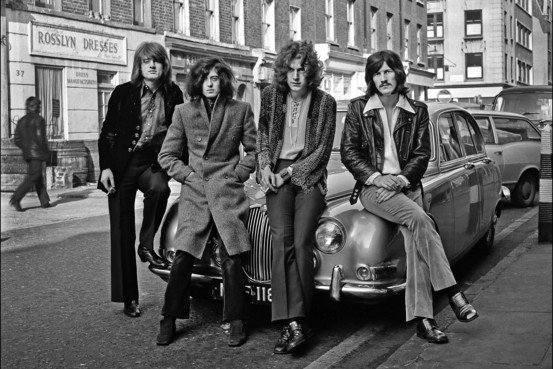
John Paul Jones, Jimmy Page, Robert Plant and John Bonham in London in 1968 Redferns/Getty Images
In late 1968, Led Zeppelin began pioneering a heavier, more metallic-sounding form of rock geared for FM radio's new album-oriented stereo format. By combining a slashing electric guitar and wailing vocals with a rhythmic bass and locomotive drums, the band quickly became the darlings of better stereo systems and large indoor arenas—and inspired several generations of metal-driven rockers.
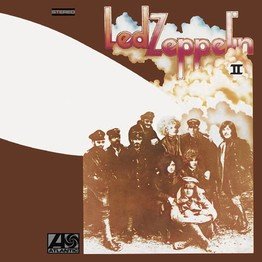
When "Whole Lotta Love" was released in October 1969, it appeared first on "Led Zeppelin II," the band's second album, and then as a single weeks later—with a shorter edit for AM radio. While the single reached No. 4 on Billboard's pop chart, the album shot to No. 1 in November, and a three-month battle with the Beatles' "Abbey Road" for the top spot ensued.
With the reissue of Led Zeppelin's first three albums on Tuesday by Atlantic Records, guitarist Jimmy Page, 70, recording engineer George Chkiantz, 70, and final-mix engineer Eddie Kramer, 71, reflected on how the famed guitar riff evolved, why the voice of lead vocalist Robert Plant pre-echoes on the recording and how a 1985 lawsuit by blues artist Willie Dixon resulted in a co-songwriter credit for "Whole Lotta Love." (Mr. Plant, who opposes a reunion tour, and bassist John Paul Jones declined to be interviewed.) Edited from conversations.
Jimmy Page: I came up with the guitar riff for "Whole Lotta Love" in the summer of '68, on my houseboat along the Thames in Pangbourne, England. I suppose my early love for big intros by rockabilly guitarists was an inspiration, but as soon as I developed the riff, I knew it was strong enough to drive the entire song, not just open it. When I played the riff for the band in my living room several weeks later during rehearsals for our first album, the excitement was immediate and collective. We felt the riff was addictive, like a forbidden thing.
By January 1969, we had cracked America wide open with the release of our first album and our first U.S. tour. I had this avant-garde master plan for "Whole Lotta Love" and could hear the construction coming together in my head. From the start, I didn't want "Whole Lotta Love"—or any of our songs—to be a single. I had been a session musician since the early 1960s, as had [bassist] John Paul Jones. We had recorded on hundreds of singles and hated the abbreviated, canned format. I also knew that stereo FM radio was emerging in America for albums and I wanted to develop our songs emotionally, beyond just lengthy solos.
Atlantic got it, but in truth, there was little risk on their end. John Paul and I knew our way around a recording studio. More important, I wanted to expand our approach to keep our album from being chopped up for AM radio. To make sure that didn't happen, I produced "Whole Lotta Love"—and the entire second album—as an un-editable expression, a work that had to be aired on stereo FM to make sense.
During the band's rehearsals in early '69, "Whole Lotta Love" sounded strong enough to open our second album, so I wanted to record it first. In April, we went into London's Olympic Studios and cut "Whole Lotta Love" with engineer George Chkiantz, who had recorded Jimi Hendrix there.
George Chkiantz: There were two studios at Olympic—one large and one small. Management had installed our 16-track recorder in the small one with hopes of luring rock bands in there and away from the larger 60-by-40-foot space with 28-foor ceilings, where we recorded mostly classical works and film scores. But Jimmy [Page] chose the larger one—even though it only had an 8-track recorder. He wanted the extra space so the drums could be miked properly for stereo.
I was a relative novice then, and what Jimmy wanted was a stretch given Olympic's traditional way of miking drums. So I invented a new way. I didn't mike the snare, since that would have reduced the size and space of the drum sound. Instead, I used a stereo mike on an 8-foot boom above the drums along with two distant side mikes, to give the tom-toms edge, and a huge AKG D30 mike positioned about two feet from the bass drum. Jimmy knew that high-end mikes didn't have to be up against an instrument to maximize the sound.
Mr. Page: For the song to work as this panoramic audio experience, I needed Bonzo [drummer John Bonham] to really stand out, so that every stick stroke sounded clear and you could really feel them. If the drums were recorded just right, we could lay in everything else.
Mr. Chkiantz: To make the drums sound impressive, I placed them on a platform about 1½ feet off the floor. The floor at Olympic was made of wood, not cement, which meant I needed to keep any drum movement from transmitting rumble across the wood floor to other mikes.
When we began taping, Robert sang in the studio but eventually he moved to the vocal booth to better isolate his voice. At one point, Jimmy began fooling around with a theremin [an electronic instrument] that he brought along to the studio, and we worked it in when the song shifted into a weird, free form.
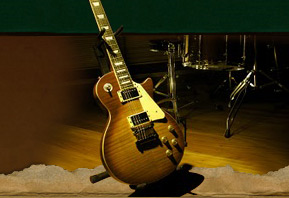
Mr. Page: The theremin's eerie sound begged for more experimentation. To get my guitar to sound surreal, I detuned it and pulled on the strings for a far-out effect. I was playing a Sunburst 1958 Les Paul Standard guitar I had bought from [James Gang guitarist] Joe Walsh in San Francisco when we were out there on tour. The Standard had this tonal versatility, allowing me to get a blistering high pitch.
Robert's vocal was just as extreme. He kept gaining confidence during the session and gave it everything he had. His vocals, like my solos, were about performance. He was pushing to see what he could get out of his voice. We were performing for each other, almost competitively.
When we toured the U.S. again in May and June, we took the rough-mix tapes along with us in a large trunk. In Los Angeles, we'd work at studios like Mirror, Mystic and A&M to overdub material, and in New York we worked at Mayfair, Groove and Juggy studios. Today, digital files are emailed all over the place, but back then you had to take your tapes if you wanted to work on the road.
When we were ready to mix all the songs for the album, I wanted Eddie Kramer to do it. Eddie had engineered several of the album's songs from scratch in London, and he had worked with us in the American studios. He also had engineered Jimi Hendrix's albums. But by the summer Eddie had relocated to the States, so when we were in New York in August, we called him. "Whole Lotta Love" was all there on tape, but it needed a big, polished sound for the album.
Eddie Kramer: The first time I heard "Whole Lotta Love" was in August '69, when Jimmy and I started working on the album's final mix at New York's A&R Sound.
Jimmy and I had first met in 1964, when he was playing on the Kinks' first album ["Kinks"] at Pye Studios and I was the assistant engineer. I also had heard Led Zeppelin early on in '68, when John Paul Jones had played me an acetate of Led Zeppelin's first album, before it was released. I was blown away—it sounded so hard and heavy.
In New York, the recording console at A&R was fairly primitive. It had only 12 channels with old-fashioned rotary dials to control track levels instead of sliding faders and there were just two pan pots [control knobs] to send the sound from left to right channels. But as Jimmy and I listened to the mix, something unexpected came up.
At the point where the song breaks and Robert slowly wails, "Way down inside…wo-man…you need…love," Jimmy and I heard this faint voice singing the lyric before Robert did on the master vocal track. Apparently Robert had done two different vocals, recording them on two different tracks. Even when I turned the volume down all the way on the track we didn't want, his powerful voice was bleeding through the console and onto the master.
Some people today still think the faint voice was a pre-echo that we added on purpose for effect. It wasn't—it was an accident. Once Jimmy and I realized we had to live with it on the master, I looked at Jimmy, he looked at me and we both reached for the reverb knob at the same time and cracked up laughing. Our instincts were the same—to douse the faint, intruding voice in reverb so it sounded part of the master plan.
Mr. Page: I hadn't heard anything like that before and loved it. I was always looking for things like that when I recorded. That's the beauty of old recording equipment. Robert's faraway voice sounded otherworldly, like a spirit anticipating the vocal he was about to deliver.
Mr. Kramer: By adding reverb, we made his faint voice more dynamic, and it became part of rock history. I also used the pan pots on Jimmy's guitar solo to fling it from side to side, so it would move from one speaker to another. I loved the sonic imagery and I like to think of my mixes as stereophonic paintings.
On the break after the first chorus, where the song gets quiet and we hear Bonzo's cymbals and percussion and Jimmy's distortion, Jimmy and I went nuts on the knobs. We had eight dials controlling the levels on eight individual tracks, so we rehearsed the choreography of what we were going to do to create the far-out sounds. Then we did it and printed the result onto the master stereo reel. Because Jimmy was a studio brat, he really understood how we could push the limits. When you have limitations in the studio, you go for it and stretch your imagination.
Mr. Page: Some people said later that "Whole Lotta Love" was based on Willie Dixon's "You Need Love" [recorded by Muddy Waters] and the Small Faces' "You Need Loving." My riff—the basis for the entire song—sounds nothing like either of them. Robert had referenced the Dixon lyrics because with my riff, they felt right. This eventually forced us to give Dixon a co-credit on our song. But if you take Robert's vocal out, there's no musical reference to either song.
When we were done, "Whole Lotta Love" ran 5:33, which at the time was too long to edit for a single. So Atlantic released the album version as a single, which was great. But soon after, Atlantic cut the single down to 3:12 to satisfy AM radio. Weeks before its release, they sent me an acetate of the edit. I played it once, hated it and never listened to the short version again.
From Ultimate Classic Rock
Jimmy Page on the Making of ‘Whole Lotta Love’:
‘Evil Sounds That You’re Not Supposed to Hear’
by Jeff Giles May 16, 2014 1:00 PM
Jimmy Page clearly had a ton of material to choose from when he sat down to curate the previously unreleased material included in the upcoming Led Zeppelin reissues. During a recent interview with Guitar World, he opened up about the selection process behind one of the tracks: an early take of ‘Whole Lotta Love’ from 1969′s ‘Led Zeppelin II.’
“At this point in the song’s evolution, I knew in my head how the whole arrangement was going to go, but I wanted people to hear how focused we were on creating a foundation that was intense,” Page responded when asked why he chose that particular performance. “And it is intense!…I think [Robert Plant]’s performance on this track is also a revelation. He’s just singing a guide vocal, but it’s pretty damn good, isn’t it? And even though you only hear some of the drums, little bits of the final Theremin part and some of Robert’s vocal in the middle section, it’s really atmospheric and stands on its own merits.”
No ‘Whole Lotta Love’ discussion would be complete without a few words about how the band created the array of oddball noises in the middle section, and Page gamely shared a few bits of information, saying, “I knew what I wanted, and I knew how to go about it. It was just a matter of doing it. I created most of the sounds with a Theremin and my guitar. The Theremin generates most of higher pitches and my Les Paul makes the lower sounds.”
Obviously, it isn’t quite that simple. “I de-tuned it radically and just basically pulled on the strings to make an assortment of growling noises,” continued Page. “Evil sounds that you’re not supposed to hear on commercial radio. [laughs] I might’ve de-tuned it to a chord, but really I’m just pulling on strings and making them howl! And then, during the mix, with the aid of engineer Eddie Kramer, we did all the panning and added the effects, including using Low Frequency Oscillators on the tape machine to really pull the whole thing down and lift it back up so the sound is moving in rhythm. It was something no one had ever done before in that context, let alone in the middle of a song. That’s how forward thinking we were, that’s how avant-garde it was, and that’s how much fun we were having.”
It was all ultimately due to what Page referred to as the “advantage of having artistic control.” As he put it, “None of that might’ve happened if had an outside producer. They might’ve questioned, or not understood, what I was doing, or thought I was just making a bunch of noise. I was able to make sure our ideas were carried out without interference.”
25 things you didn’t know about Led Zeppelin III
02/06/2014 ~ by Dave Lewis
As the deluxe, remastered version of Led Zeppelin's third album hits the shops, we pay tribute to the Welsh cottages and pet dogs that made it all possible.
Originally released in October 1970, Led Zeppelin III saw the band veering towards a folkier, more acoustic sound. 44 years on, as the album is remastered by Jimmy Page and reissued as a deluxe edition, we reveal 25 things you might not know about the original.
1: Bron Yr Aur, the cottage situated between Aberystwyth and Machynlleth in South Snowdonia where Page and Plant wrote and rehearsed material for Zep III, is Welsh for ‘golden hill', 'breast of the gold’ or ‘hill of the gold’.
2: That’s The Way was originally titled The Boy Next Door. Robert Plant introduced it under that title when they performed the song during their famous bill-topping appearance at the Bath Festival on June 28, 1970.
3: During the making of their third album, Zep were the first band to record at the newly built Island Studio 2 in Basing Street, London. This would later be the location of the recording of the Band Aid single Do They Know It’s Christmas? in 1984.
4: Despite their no singles policy, Immigrant Song was at one time lined up to be a UK single backed with the third album leftover Hey Hey What Can I Do?. It was assigned a catalogue number 2091 043 and a release date of November 27th 1970 but was subsequently shelved.
5: A cover version of Immigrant Song by Nine Inch Nails' Trent Reznor featuring Yeah Yeahs Karen O was used on the soundtrack of the David Fincher film The Girl With the Dragon Tattoo.
6: The lyrics of Hats Off To (Roy) Harper are based on Bukka White’s 1937 recording Shake Em On Down. Plant also leaned on that source for inspiration on Custard Pie, the opening track on 1975's Physical Graffiti album.
7: The traditional blues tale Gallows Pole that opens side two was discovered by Page on an album titled 12 String Guitar released in 1962 by American acoustic performer Fred Gerlach. The track was originally recorded in 1939 by iconic bluesman Leadbelly as Gallis Pole.
8: The acoustic instrumental Bron-Yr-Aur was one of a handful of tracks left off the album – it would later appear on Physical Graffiti. Page’s acoustic work on the likes of Bron-Yr-Aur Stomp revealed the influence of folk guitarists Bert Jansch and Davy Graham.
9: Down By The Seaside, The Rover and Poor Tom were all originally worked on during the Zep III sessions but issued on subsequent Zep albums – Houses of The Holy, Physical Graffiti and Coda respectively.
10: The original UK pressing of Zep III was released in October 1970 on the orange and maroon Atlantic label, distributed by Polydor. Copies bearing the inscription "Executive Producer Peter Grant", which was omitted on later pressings, are worth around £100 in mint condition.
11: Friends, conceived by Page on the balcony of his Pangbourne boathouse home in early 1970, was later re-recorded by Page & Plant in India with the Bombay Orchestra in March 1972, a version that remains unreleased. Page & Plant returned to the song for their 1994 Unledded/No Quarter MTV performances.
12: Since I’ve Been Loving You previewed on the UK in 1970, some ten months before the album’s release. Listen carefully to the studio version and you can hear John Bonham’s bass drum pedal squeaking.
13: The title for Out On The Tiles was derived from a drinking song John Bonham used to recite in the studio with the words, "I’ve had a pint of bitter and now I’m feeling better and I’m out on the tiles". It started out as a backing track dubbed "Bathroom Sound" (this version can be heard on the new Led Zeppelin III companion audio disc).
14: The Jimmy Page composed Tangerine was first recorded in April 1968 at the final Yardbirds recording session under the title Knowing That I’m Losing You.
15: Bron-Yr-Aur Stomp was written at the Bron-Yr-Aur cottage about Plant's dog Strider. The tune itself was first tried in an electric, rockier arrangement titled Jennings Farm Blues. This take can be heard on the new Zep III companion audio disc
16: Key To the Highway/Trouble In Mind was found by Page at the end of a studio tape reel from the recording session that produced Hats Off To (Roy) Harper.
17: A similar blues jam, recorded at the same session, features the band running through versions of Bukka White’s I Feel Like I’m Fixin To Die and Arthur Cruddup’s That’s Alright. Officially unreleased, this has surfaced on various bootlegs.
18: Just prior to the release of Led Zeppelin III, Zep jammed with Fairport Convention at a gig at the Troubadour in Los Angeles. Although recorded at the time, the tapes remain unreleased.
19: The elaborate Led Zep III sleeve was designed by Zacron, a former student of Kings Collage of Art, who Jimmy had first met in the early 60s.
20: The photos that adorn the back cover were taken by sleeve designer Zacron during a series of visits he made to each of the group members' respective houses in the spring of 1970.
21: Original pressing of the album have an inscription on the run-out groove of each side - "Do What Thou Wilt" on side one and "So Mote It Be" on side two. Both are quotes from the black magic occultist Alistair Crowley, who Page had an interest in.
22: In September 1970, Led Zeppelin were voted the world’s top band in the annual Melody Maker Poll, ending The Beatles reign. Plant and Bonham appeared on BBC TV’s Nationwide news programme to explain their success (and have a smoke!)
23: The swirling noise that cross-fades Friends into Celebration Day was a deliberate edit effect by Page to cover up a studio cock-up when John Bonham’s original opening rhythm track to Celebration Day was wiped.
24: The famous bootleg album Led Zeppelin Live On Blueberry Hill, recorded at the LA Forum on September 4th 1970, includes live versions of Immigrant Song, Out On the Tiles and Since I’ve Been Loving You, performed a month prior to the album’s release.
25: Page mixed Led Zep III at Ardent Studios in Memphis with Terry Manning, a studio engineer Page knew from his Yardbirds days, when Manning was in the band Lawson and Four More.
Nothing too mind-blowing on the new Zep reissues but I love the raw alternate takes on probably my top two favorite Zep songs: Since I've Been Loving You and Heartbreaker.
That kind of stuff is gold. Wish they would have given some material in that vein for Zep I, instead of the third or fourth batch of live tracks from that era. Live stuff is good and all but it's far, far less unique than studio outtakes. We have lots of chances to get good live material, but on what other release will we ever get to hear studio outtakes from this album?
Funnily enough I was going to listen to a Led Zeppelin song on Youtube today (The Crunge, if anyone's interested) when the advert for the new re-releases came on before the song started - it was a pleasant surprise to hear the Good Times Bad Times riff come in when the video started!
^I ordered the Deluxe box sets and they are set to be shipped tomorrow [allegedly] to arrive next week. So far, it has been mostly positive reviews in the Zeppelin community about how they sound across the board. Balance among the instruments and clarity to the point where even the irrelevant like echoes and bleeds can be heard.
This site uses cookies to help personalise content, tailor your experience and to keep you logged in if you register.
By continuing to use this site, you are consenting to our use of cookies.