Led Zeppelin (Official Thread)

gcczep

Ever Onward...
Joined
Apr 29, 2011
Posts
4,374
Reaction score
17
Location
Between my left and right speakers...
1977...Part 1

Behind the Curtain – Interviewing Led Zeppelin in 1977
Written by: Steve Rosen
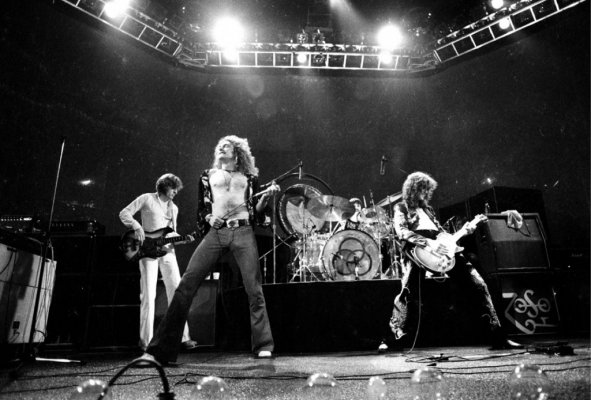
led-zeppelin-live1-1024x694.jpg

Steve Rosen has been writing about the creatures of rock and roll for 40 years. His stories have appeared in and on Guitar World, Guitar Player, Guitarist, Total Guitar and Ultimate-Guitar.com and virtually every other magazine and website with “guitar” in its title. The Laurel Canyon resident has written seven books—including works on Jeff Beck, Free/Bad Company, Black Sabbath and Randy Rhoads—and has been referenced in too many books to count.

He presides over an audio archive consisting of more than 1,000 hours of recorded interviews with everyone from Aerosmith, Alice Cooper and AC/DC to ZZ Top, Frank Zappa and Led Zeppelin. Rosen has not only broken bread with these iconic characters but he’s also broken hotel room mirrors and even come to blows with them. You can read about some of Steve Rosen’s wonderful rock adventures here in our Behind the Curtain category—and learn once and for all…who is the real Wizard of Ahhs.


It is 1977 and Led Zeppelin is in the midst of their 11th tour. I’m sitting aboard Caesar’s Chariot, their customized Boeing 707 jet and gazing around the cabin in awe and wonder. Appropriately named after the conquering emperor who was ultimately doomed by an addiction to his own glory, this flying fortress now carries a modern day version of an invading force.

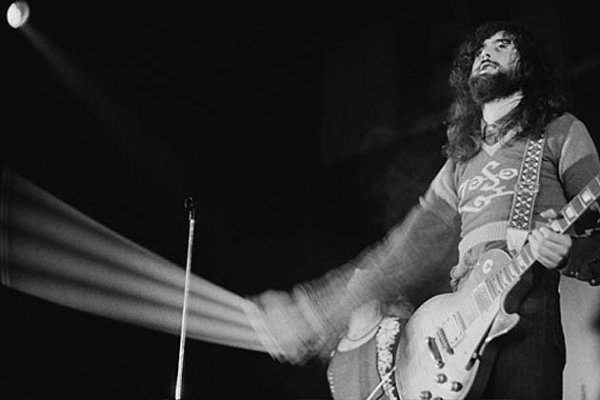
To borrow a phrase from Jimmy Page, a “Guitar Army.” Page, Robert Plant, John Paul Jones and John “Bonzo” Bonham are sitting around the cabin in various overstuffed armchairs as the plane returns them to their base of operations in Chicago. Zeppelin has just annihilated a sellout crowd of pagan revelers in St. Louis and the band is using the 45-minute plane ride to decompress and bring down adrenaline levels.

That I’m here at all is a miracle. Arranging for the interview took nearly seven months, during which time I haggled, cajoled, assaulted and retreated. Guitar Player Magazine first contacted me in early fall of 1976 because they had bitten down hard on the idea of landing a Jimmy Page interview.

The magazine had made one cursory call to Zeppelin’s Swan Song offices in New York and after getting nowhere, passed the baton to me.

My daily schedule during this period revolved around the all-important phone call to Swan Song—Zeppelin’s record label—to check on the status. I spoke with everyone from Danny Goldberg and Abe Hoch—U.S. and UK vice presidents respectively—to every person in the publicity department including Sam Aizer and Janine Safer [she would eventually save my life, metaphysically speaking].
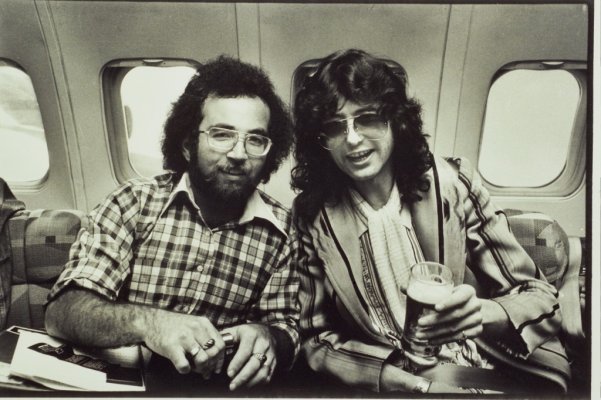
Jimmy-Page-2-1024x682.jpg

I left messages and kept hounding them. I realized early on that the Zeppelin juggernaut was a finely-tuned and autonomous machine and the only way I was going to break down the fortress walls was through relentless attacks. I made my first breech when management presented me with the Rules of Engagement. Jimmy Page rarely did interviews and generally despised the press, so the handlers wanted to make sure they controlled every aspect of the proceedings.

They told me:
1. It must be a cover story. It was.
2. I had to provide them with a copy of the questions pre-interview.
3. I would not. There was to be no discussion of drugs, alcohol, or women. There may have been.

Secondly, they provided me with a strict Rules of Etiquette code by which I would conduct myself:

1. Never speak with anyone without first getting an OK from a higher-up (most notably tour manager Richard Cole).
2. Never, ever bother manager Peter Grant.
3. Never wander too far away from your hotel room phone. Interviews might happen anytime day/night and you had to be available.
4. Never be late for the pre-flight rendezvous down in the hotel lobby. If you were two minutes behind schedule, you would be left behind.

An accord was reached and I received the call—I’d be allowed to stay at the band’s hotel, accompany them on their plane, and be granted interviews with both Page and Jones. I screamed like a maniac and packed my bags. I flew out to Chicago from California just a few days later and met up with the band about two weeks into the first leg of their 11th US tour.


The plane has landed and I am sitting in the back of a limousine alone. I never drove in a car with the band. I’m not really so much concerned about sharing a stretch with the group as I am troubled by one niggling thought: When the f—k am I going to interview Page? I’ve been in Chicago for three days and the only time I’ve seen Page is onstage or on the plane. I’m like a prisoner in paradise. My room is 350-square feet of plush and very chic. But I’m afraid to wander too far away from the phone because I know the second I do, it’s going to ring and I won’t be there (see Rules of Etiquette, Rule 3 above).

Another day passes and I’m sitting in my room after having just devoured a huge Col. Sanders chicken meal and multiple Winchell’s donuts—the craving for grease and sugar is unstoppable. The phone rings and my heart leaps into my throat when I hear I’ll be able to speak with John Paul Jones. I swallow the last bite of an apple-filled donut and high on a sugar rush, I exit my room. Janine Safer—Swan Song’s publicist—accompanies me to John Paul Jones’ room. She makes the introductions and leaves.

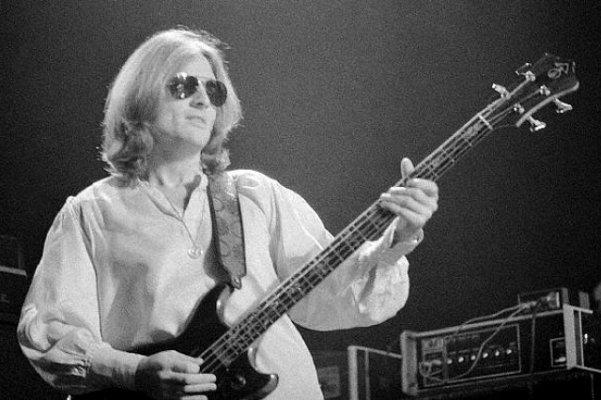
John Paul is way cooler than I’d ever imagined. He is a huge part of Zeppelin’s sound—Jones not only plays bass but keyboards, guitars, and helps with arrangements—but is never quite given his due. We talk for well over an hour about joining Zeppelin and touring and a genuine bonhomie fills his suite.

My mission halfway complete, I spend another day swallowing calories and looking out my hotel window. Resignation sets in and I mutter sotto voce—I’m going a bit stir crazy by this point—“What will Guitar Player say if I come back with just the John Paul Jones interview?” I know the answer. They’ll tell me I did a good job and run the story but I’ll know I failed miserably and return a haunted soldier.

Finally on the following day, it happens. “Jimmy will see you now,” says a disembodied voice on the other end of the phone. Once again I grab up my cassette player and notes and walk out into the hallway. Instead of Janine Safer, standing there are two massive sides of beef with walkie talkies. They motion for me to follow them and escort me to Jimmy’s room. This was another rule: Never walk anywhere within the Zeppelin zone without someone accompanying you. -
 
Last edited:
gcczep

Ever Onward...
Joined
Apr 29, 2011
Posts
4,374
Reaction score
17
Location
Between my left and right speakers...
1977...Part 2

Behind the Curtain – Interviewing Led Zeppelin in 1977
Written by: Steve Rosen

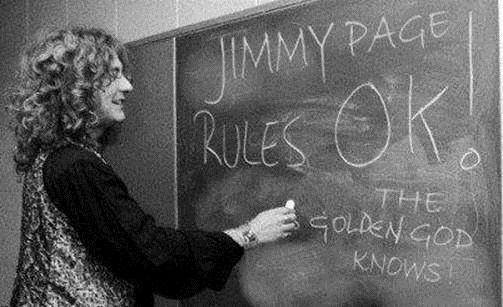
jimmy-page-rules-pic.jpg

Upon entering Page’s spectacular suite, the first thing I see is a busted telephone and a hole in the wall. Pieces of plaster litter the bed and floor and the telephone is in pieces. Jimmy sees my look of alarm and tells me he ripped the phone from the wall because he felt intruded upon and didn’t want spying ears listening in.

I ignore the destruction and jump into his early history as a studio player; his influences; and how he achieved certain sounds on the Zeppelin albums. I know at that moment I’m doing my job—capturing on tape the thoughts and insights of the world’s most influential guitarist—and I feel like a king. From the second I had been granted access to the guitarist, I recognized the importance of this interview.

And at one point during the conversation, even Jimmy even interrupted himself mid-thought to reveal, “I know the importance of what we’re doing. It needs to be talked about.” He understood.

We talk for about an hour and I can tell Jimmy has had enough. His responses are more obligatory than enlightened so I draw the conversation to a close. I hint at doing a second part and he seems non-committal so I take it as an affirmative.

One night later when we’re returning from yet another Zeppelin show on Caesar’s Chariot, Janine Safer grabs me and says Jimmy will give me 15 minutes. As we walk down the aisle, I’m accompanied to the rear of the plane in a procession with Safer on point, a monster security guard behind her, me, and another bouncer behind me. Everything is done with military precision but for all the world this feels more than anything like a dead man walking.

I greet Jimmy and it’s hard to tell whether he recognizes me from the previous day or not. It is almost impossible to hear him over the white noise roar of the jet engines coupled with the fact that he naturally talks in a voice barely above a whisper. As I’m hunched over and desperately trying to understand what he’s saying, I feel a vise-like grip grab my right shoulder

john-paul-jones-1.jpg

My first thought is, “No way was that 15 minutes.” As I’m thinking this, another hand grabs me by the left shoulder and physically lifts me from my seat. I rise and incredulously, standing before me is one absolutely furious John Paul Jones—and that’s when my world unravels.

“Rosen, you ****ing bastard liar. I should ****ing kill you.”

The venom in his voice staggers me. I feel as if I’m having an out-of-body experience. But each time I shut my eyes and open them, I’m still there. Somehow I am still standing on an airplane traveling 600 miles an hour, hurtling towards a destination I know I don’t want to reach. I figure he must be kidding, taking a shot at the new kid, the journalist on the road.

But he doesn’t break into a smile.

What makes this all the more unnerving is that John Paul and I had spent some illuminating time together. He was relaxed and open and seemed to genuinely appreciate our exchange. He told me how much he loved Zeppelin. “The first time we all met in this little room just to see if we could even stand each other,” Jones said. “Jimmy said, ‘Do you know a number called The Train Kept A-Rollin’?

He counted it out and the room just exploded and we said, ‘Right, we’re on. This is it. This is going to work.’ And we just sort of built it up from there. And now I wouldn’t be without Zeppelin for the world.”

And I believed him. You couldn’t help but believe him. Led Zeppelin was John Paul’s life and passion and he was forever protecting it—as he told me—from those who would try to run it down. He was talking about critics in the main, journalists who would tell him how much they admired the band and then turn around and write scathing reviews.

And here confronting me now is all that passion turned poisonous.


The bassist hurls curse after curse and even motions in a gesture carrying with it physical implications. Though I’ve never been in a fight in my life, his veiled threats do not cause me much alarm. John Paul, I felt, was someone against whom I could probably hold my own. No, it is the standing mountains of muscled beef surrounding him—his security team—that give me pause.

They shoot me looks that convey a pretty simple message: Make even the slightest motion towards this man before you, and what happens next will surely be one of the less pleasant moments you’ll ever experience.

At that point, it’s hard to determine whether it’s more the fear or embarrassment that has rendered me speechless and immobile. As I fall in and out of moments of lucidity, I’m trying to figure out why I’ve been singled out for Jonesy’s personal attentions when I see there in his right hand, a copy of Rock Guitarists.

It is a compilation of Guitar Player stories collected over the past several years.

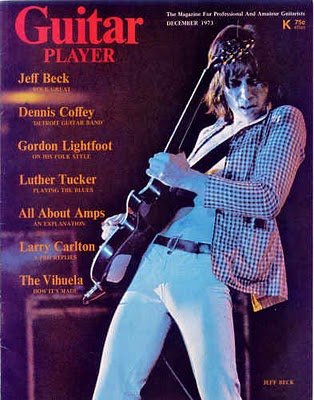
He has rolled it up into a tube shape and smacks it repeatedly into his open left palm. I had written the Jeff Beck story gracing the cover and had brought copies for Jones and Page. Peace offerings, I thought. They both knew Jeff of course and I thought the gesture would present me as a writer with a bit of street cred. The magazine is rolled up weapon-style and for a moment I thought he is going to strike me.

Instead he unfolds it, opens it to a page and shoves it at me. I glance down and see words like, “Page…failed to recreate…Zeppelin a grandiose reproduction…” In that second it hits me—this is my Jeff Beck story and I have screwed up in a major way.

Guitar-Player-Dec_-73-Jeff-Beck.jpg

This was the first story I’d written for Guitar Player three years earlier and it had not painted Zeppelin in a pretty light. I had completely forgotten what I’d written or I would have never in a million years given copies of this to the band.

I am horrified and embarrassed. Jonesy, the most mild-mannered and politest individual you would ever want to meet, is shaking like a wild beast. There is blood in his eyes and he wants my head on a spike. He can’t have that but he does lance me through the heart when he says, “There is no ****ing way you’re doing any interviews. Give me back all the tapes.”

I do a quick mental calculation and think, “These were my tapes and my property. I will not give them to you.” I weigh that thought against what the wall of flesh surrounding me will do if I utter those words and immediately hand over all my tapes. I am in the enemy’s camp and there is nowhere to run.

We finally land. I find my designated car and return to the Ambassador East. I am scheduled to accompany the band for many more days but all I can think of now is sneaking out in the middle of the night before any further vengeance is loosed on me.

I immediately book a plane back to Los Angeles for early the next morning. I crawl into bed and wrote a letter to Jones. I try to explain that what I had written in that piece was simply the ranting and rambling of a novice journalist and I had made those outrageous comments in order to make a name for myself. There is no apology big enough to sooth the savage beast in him but I had to try and least explain myself. I figure I will slip it under his door before departing.

I’m just about to turn out the lights when there is a knock on the door. The sound scares the hell out of me and I pretend to ignore it but the rapping continues. Finally, Janine yells for me to open up. She saw what had happened.

I could barely face her but she told me to go down to John Paul’s room and apologize.

I walk down to his suite with letter in hand. I rap lightly and the door immediately opens as if he is waiting for me. I can’t even look in his eyes and am about a second away from tears so I simply hand him the letter and walk away. He calls me back and hands me the tapes.

“I hated what you did and I think you’re a lowlife asshole. But you had a job to do.”

Several months pass. It is March 1978 and I at a show for Detective at the Starwood club in Hollywood. I am upstairs with my brother in the VIP lounge when he says, “John Paul Jones is over there and he’s coming over.” I told my brother the story and I laugh when he says this because I know he’s joking. I turn around and see Jonesy walking towards me and think, “Oh, my god. Not again.”

I rise from the chair and face him. I steel myself for another onslaught and am just about ready for any verbal abuse he might fling. What I’m not prepared for is his apology. He tells me he read my letter and understands. He says he is sorry for the way he acted.

Now I am really near tears. John Paul has seen the Guitar Player issue with his feature story in it and I think he was pleased.

We hug it out. I buy him a drink and he returns to his table. It is the greatest moment of my life.
 
Last edited:

gcczep

Ever Onward...
Joined
Apr 29, 2011
Posts
4,374
Reaction score
17
Location
Between my left and right speakers...
Plant in Church

Stars Robert Plant and Steve Winwood rock Cotswold church in charity gig
By Gloucestershire Echo

6007890-large.jpg


Read more: Stars Robert Plant and Steve Winwood rock Cotswold church in charity gig | Gloucestershire Echo
Read more at Stars Robert Plant and Steve Winwood rock Cotswold church in charity gig | Gloucestershire Echo

Led Zeppelin legend Robert Plant has sung at some of the biggest venues in the world, but when he turned up to play at a charity concert in a Cotswold Church, perhaps he was building a stairway to heaven.

The rock god was one of the musicians who played at an annual fundraising concert at the Church of St Peter and St Paul in Northleach.

The concert was organised by Gordon Jackson, a musician himself and retired gardener, who pulled some strings to get the former frontman of the biggest band in the world – in its 1970s heyday- to the small Cotswold town.

He said: “I’m always hopeful when I ask someone. I had his contact detail so I sent him an email asking him if he fancied playing, and got one back within an hour saying yes.”

Of course, MR Jackson has a slight advantage than most other people organising a charity gig. He used to be a pro musician in the sixties in and around Worcester and Birmingham, playing in a band called Deep Feeling with figures such as Jim Capaldi, and Dave Mason who went to become stars in Traffic with Steve Winwood.

Mr Jackson, 71, said: “I’ve been putting on a concert since 1991, I started in Bourton-on-the-Water where I ran a youth group, and Steve Winwood has been taking part since the start. We’ve had all sorts of people, Ruby Turner has played for three years.

But the appearance by Robert Plant, alongside Steve Winwood, and Chinese X Factor winner Mary Jess, Lily and Cal Winwood and Bill Hunt from Wizzard and Tony Kelsey from The Move, brought something special, and probably unique.

Mr Jackson said: “I think Steve and Robert have talked about it, but I don’t think they’ve ever played together. Steve always says he doesn’t want to sit behind an organ for our concert, so he plays bass in the band. To be fair, he’s probably one of the best bass players you can get.

“Robert performed Nobody’s Fault But Mine, and he asked Steve if he wanted to sing a verse or two. So they duetted, I don’t think they’ve ever done that before.”

And many more people than normal got to see a fantastic evening of music from a whole host of performers.

Mr Jackson said: “We’ve had about 220 people last year, 240 the year before and the church can only seat 250. But I have an email list, and those people emailed, and the church has its network. At 410 people we decided we couldn’t let any more in, though a few did sneak in so it was well over 400 people in there. It was packed.

“Someone asked me what I was going to do next year and I said I was going to get Elvis.”

The concert raised £5,000 which, after costs, will see £1,100 each given to the church and three charities, Open Doors, The Children’s Society and Christian Aid.

Mr Jackson’s next venture is likely to be a calmer acoustic and classical concert at the Northleach church sometime at the end of the summer.
 

gcczep

Ever Onward...
Joined
Apr 29, 2011
Posts
4,374
Reaction score
17
Location
Between my left and right speakers...
Samples...

Jimmy Page previews Led Zeppelin bonus tracks in New York

'It made sense to revisit the original albums,' legendary guitarist says of upcoming reissues

by John Kryk QMI Agency

1297560127117_ORIGINAL.jpg

NEW YORK - There's no "jiggery-pokery" on the new Led Zeppelin album reissues, Jimmy Page insists.

That is, no melding of different takes, no clever studio tricks by which he cobbled together complete alternate versions of staple songs from his juggernaut classic-rock band's 1968-82 oeuvre.

Just pure, and in some cases purely different, sister takes.

"They're all the real deal, man," Page, now 70, told a few dozen members of the press at a Soho hotel.

And if eight samples Page played for journalists on Tuesday are any indication, the new material will frickin' rock. Real surprising, huh?

The first three of Zeppelin's nine studio albums go on sale June 3. Deluxe editions of each will contain a companion disc boasting alternate versions and, in the case of Led Zeppelin III, a newly discovered unreleased track: an ad-hoc acoustic blues number.

In addition to remastered CDs, Atlanta/Swan Song also is releasing these dual offerings on vinyl and digital download. A "Super Deluxe Boxed Set" of each will contain all sonic formats plus a hardbound, 70-plus page commemorative photo book of the band circa the album's release, plus a print of the album cover.

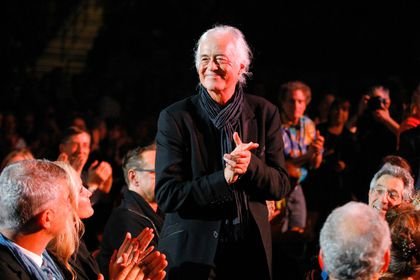
Page on Tuesday played eight bonus tracks off the first three albums. Looking lean and healthy in a blue, three-piece suit with scarf, and mentally as sharp as the third-position E-chords he slashed on his psychedelic Tely to open Track 1 of Album 1, Good Time Bad Times -- Page answered reporters’ questions for about half an hour.

The motivation for the reissues?

"We've got so many different formats that it made sense to revisit the original albums," Page said.

The upgrades are cutting-edge and of such high resolution as to serve future formats not even available, Page said. To what specific resolution?

"I'm not giving away all my trade secrets."

The remainder of Zeppelin's original-album catalogue -- namely, Led Zeppelin IV, Houses of the Holy, Physical Graffiti, Presence, In Through the Out Door and Coda -- will be released throughout 2015.

"There's lots of good things to come," Page said teasingly, including another ripping version of Bonzo's Montreaux -- a percussion solo featuring John Bonham, whose death in September 1980 broke up the band.

Here are mini-reviews of the eight tracks Page previewed in New York:

Good Times Bad Times / Communication Breakdown (Led Zeppelin I)

A medley from a live gig in Paris in 1969. Just a snippet of GTBT, before the band and, especially, singer Robert Plant shred the opening album's hit song. We are reminded that no matter what is left of Plant's voice now, he had absolutely no break pedal in those early days. He screamed and shrieked his throat off. That he had anything left of his vocal cords by 1971 is a minor miracle.


You Shook Me (Led Zeppelin I)

From the same Paris gig, a wicked version of this blues-slide belter. As with the two studio versions the band has released (on LZI and the 1990 CD boxed set), the highlights of this track come when Plant's moan and Page's slide slowly descend in unison.

Heartbreaker (Led Zeppelin II)

Sounds almost exactly like the studio version, but with a different (although no less grungy) Page solo, and with different guitar overdubs segueing back to the main riff. By far the superior version of this song is on the album.

Whole Lotta Love (Led Zeppelin II)

Pared-down version, perhaps containing just one guitar -- Page's base-track electric hitting that memorable riff. Most notable by its absence: the volume-increasing, note-descending electric slide from Page following every Plant refrain of "Gotta whole lotta love." You find yourself filling them in. The vocal track is completely different, at least before the "shake for me girl" lyric begins near the end. No Bonzo bongo overdub either. With the song laid bare, you better appreciate Page's production sense.


Gallows Pole (Led Zeppelin III)

Ditto on this one. Just Jimmy's base-track acoustic guitar. No JPJ mandolin, no Jimmy overdub banjo or fuzzboxy solo at the end. Page said Tuesday his acoustic guitar track, with its interesting elements, got lost in the album version once all the other instruments buried it. This version puts it in the shop window for the entire song.

Since I've Been Loving You (Led Zeppelin III)

The best alternate track of the eight, by far. Recorded live in studio by the band days before the final album take, this version is BETTER than the original, at least from the second verse on. Way more intense, especially from Page on one of his signature Zeppelin tracks. Jones' staccato and stop-start bursts of organ over the intro and first verse reveal he was still feeling his way through the track at this point, as Page on Tuesday more or less said of them all. On his electric-guitar solo on this version, Page absolutely cooks. Better than any live version I've ever heard. He said Tuesday the band would sometimes deliberately over intensify early versions of songs before toning it down for the final take. Thank goodness this version survives. A must-own for any Zep purist.

Immigrant Song (Led Zeppelin III)

From Page's audible count-in of "two … three … FOUR …," you know right off the bat this will be different from the original. But not much. Sounds almost like the final version, with only one or maybe two Page electric-guitar tracks, instead of the cacophony. Plant's vocals get the extra studio treatment on this incarnation -- more echo, maybe even with that harmony machine they used at concerts in the late 1970s. But what you gain in the cool, tight, upgraded vocal assault you lose in Page's squelched guitar work.

Keys to the Highway/Trouble in Mind (Led Zeppelin III)

This is the new track that Page discovered. It's the only take of it, and it features just him on acoustic guitar and Plant on both vocals (employing the same tremolo effect as another bluesy number on LZIII, Hats off to Roy Harper) and electrified blues harp (think When the Levee Breaks). No Jonesy, no Bonzo. Yet I would have preferred this on LZIII to the far less accessible Harper.
 

gcczep

Ever Onward...
Joined
Apr 29, 2011
Posts
4,374
Reaction score
17
Location
Between my left and right speakers...
Classic New...

Jimmy Page Says He ‘Left No Stone Unturned’ While Crafting Led Zeppelin Box Sets
by Ultimate Classic Rock Staff May 14, 2014 7:40 PM

148170691.jpg

Led Zeppelin guitarist Jimmy Page told us he “left no stone unturned” while remastering and expanding the legendary group’s studio albums for their upcoming deluxe edition re-releases, and said his goal was to offer listeners “a window into when they were recorded.”

Page hosted an intimate listening event to preview songs from the expanded versions of Led Zeppelin’s first three albums yesterday in New York City. He shared alternate or newly unearthed live performances of seven of the band’s classics — including a version of ‘Whole Lotta Love’ with a completely different vocal take, and a ‘Gallows Pole’ demo that removes the mandolin and banjo in order to put the focus squarely on Page’s acoustic guitar work. He also played us one of the collection’s most anticipated treasures, an acoustic version of the blues standard ‘Keys to the Highway / Trouble in Mind,’ which featured just himself on acoustic guitar and Robert Plant on harmonica and vocals.

Our initial impressions were something like “holy (word we can’t use)!,” but to be more professional about it, these alternate versions sound refreshingly raw and original. They’re not so radically different that you can’t easily reassemble the more famous versions in your head — we kept adding the guitar slide back into the chorus of this version of ‘Whole Lotta Love,’ for example. But hearing first-hand the effects of the different track and mixing choices Page and his bandmates made back in the day does indeed accomplish their stated goal of offering exciting new perspectives on songs we’ve all enjoyed hundreds of times.

The fit-looking, sharply dressed and quick-witted Page also participated in a highly entertaining Q&A following this listening session. He took us all the way back to the band’s formative days, recalling that when he, Plant, John Paul Jones and John Bonham first played together, “We knew we’d never heard anything like this before.”

He went on to praise both the individual talents of his former bandmates (“each of us were musical equals”), and Led Zeppelin’s collective chemistry, noting “we played so well as a band and that’s what’s reflected” on these new collections. Page also revealed that no actual restoration was needed for the tapes of the first three albums, as the masters were still in good condition.

As far as the painstaking amount of work Page put into this massive project, he said that he listened to every single one of the group’s recorded tracks and used only complete takes for the new versions of songs. That means there was no after-the-fact Beatles ‘Anthology’ cut-and-pasted “jiggery-pokery” to create the illusion of completed tracks out of different partial versions. “They’re all the real deal,” he assured us.

Which doesn’t mean we’re not in for some big changes. For example, ‘Since I’ve Been Loving You’ has what Page called “a completely different drum take,” while the guitars used on the new versions of that track and ‘Heartbreaker’ are “much cooler” and laid back than their fiery original album counterparts. Page sees these different versions as a natural reflection of the band’s musical open-mindedness. “I recall having many different approaches to the guitar. … We pushed things. … Everything was supposed to sound different.”

Always known for his innovative producing skills as well as his songwriting and guitar-playing wizardry, Page told us that the music of Led Zeppelin is now as prepared as possible for whatever the future of audio playback brings. Although he wouldn’t give away his “trade secrets,” he assured us that his work was done in such a cutting edge, high-resolution format that it’ll be ready for future formats Apple and Neil Young haven’t even dreamed of yet.

Page summed up his thoughts by saying that the overall experience of going back through Led Zeppelin’s recorded work was “so joyous,” and that he’s excited for fans to hear the treasures that await them on the expanded versions of the rest of the band’s catalog: “There’s lots of good things to come.” Among them are an alternate version of ‘Bonzo’s Montreaux,’ a percussion solo Page included on 1982′s ‘Coda’ as a tribute to his fallen friend. You can expect those albums sometime in 2015.
 

gcczep

Ever Onward...
Joined
Apr 29, 2011
Posts
4,374
Reaction score
17
Location
Between my left and right speakers...
Zeppywood...

Whole Lotta Love: Industry Likes What It Hears at Private Listening Session of Led Zeppelin Reissues

jimmy_page_2012_l.jpg


Jimmy Page treated about 40 people to tracks to be released June 3, saying of the legendary band: "We were able to reach the stratosphere."

During a private listening session of selections from the Led Zeppelin catalog that will be reissued this summer, veteran guitarist Jimmy Page described the archival material as “an opportunity to have a look and listen to everyone in the band.”

Page says the music captures how he, singer Robert Plant, drummer John Bonham and bassist John Paul Jones gelled together as bandmates. “We were able to reach the stratosphere,” he said of their chemistry together.

Dressed in a loose black suit and scarf, Page was relaxed and in good humor on May 13 at New York’s Crosby Street Hotel as he fielded questions from about 40 journalists and industry members who gathered to hear eight selections that spanned the three albums -- “Led Zeppelin,” “Led Zeppelin II” and “Led Zeppelin III” -- that will arrive June 3. Each will be released as a CD, on vinyl and digitally; deluxe packages of the records will contain a companion disc of previously unreleased music related to that particular record. The rest of the band’s catalog will be reissued chronologically at a later date.

Former Rhino senior vp A&R Robin Hurley, who now acts as a consultant to Rhino for such bands as Zeppelin, introduced Page by saying the musician had been “basically embedded” in the band’s vault for three years, sorting through multiple takes of each track. Page, who remastered the collection, noted that he didn’t find it hard to determine which take of each song was the best one to use -- some of them had 12 to 15 versions on offer -- and that all of the material included in the reissues were complete versions of each take.

For about 30 minutes, the audience sat in darkness, save for a movie screen with the Led Zeppelin logo and images of the band’s first three albums, listening to the music. Page played live versions of “Communication Breakdown” and “You Shook Me” to represent the companion audio to “Led Zeppelin.” (The songs were recorded during an October 1969 concert at Paris’ Olympia Theatre.) Alternate studio versions of “Heartbreaker” and “Whole Lotta Love” were heard from “Led Zeppelin II”; and “Gallows Pole,” “Since I’ve Been Loving You” and “Immigrant Song” were played from “Led Zeppelin III”; along with “Keys to the Highway/Trouble in Mind,” a classic blues number recorded in 1970 that was released for the first time in April.

The differences between the original Zeppelin tracks and the ones Page selected for the reissues were obvious. For example, the intro to “Good Times Bad Times” was tagged to the beginning of “Communication Breakdown.” The guitar solo in the middle of “Heartbreaker” differs from the album’s version. The psychedelic studio wizardry section in the middle of “Whole Lotta Love” was less trippy and much more dependent upon Bonham’s drumming to drive it onward, and “Gallows Pole” was completely acoustic instead of incorporating the electric guitar that augments the track on “Led Zeppelin III.” Fans will also be surprised by the ending of the alternative take to “Immigrant Song.”

Hearing Zeppelin’s music thunder from the hotel’s stereo system would have been exciting even if it hadn’t been rarities that were being played. Jones’ bass was a fearful heartbeat galloping through “Gallows Pole,” and the choppy flanger effect on Page’s guitar during “Immigrant Song” hovered in the air. During “Whole Lotta Love” Bonham’s symbols clanged as sharp as breaking glass, and Plant’s howls still resonated with the same gut-wrenching primal force as when they were first heard in 1969. When it ended, one audience member declared, “That was f---ing genius.”

Overall the room was pleased with what it heard. Ben Smith of VH1.com asked Page how he thinks the reissues will affect the lore of where Led Zeppelin was in its career when it released each album. “I don’t think it changes the story,” Page replied. “I think it augments it. It adds color to it.”

The only minor criticism Page fielded was from Modern Drummer’s Michael Parillo, who noted that little new material from Bonham could be heard. Page assured him that “there’s more good things to come” when the rest of the catalog is rereleased, such as a new version of “Bonzo’s Montreux” that will arrive with the “Coda” reissue. Then he joked that he shouldn’t give such surprises away. “Can we rewind the tape?” he said with a smile.
 

gcczep

Ever Onward...
Joined
Apr 29, 2011
Posts
4,374
Reaction score
17
Location
Between my left and right speakers...
Turn The Page

Jimmy Page Talks About His Old Band, Its Legacy and Himself
By LARRY ROHTERMAY 15, 2014

page-image-master495.jpg

In Boston last week to deliver the commencement address at the Berklee College of Music, Jimmy Page, the founder of Led Zeppelin, learned to his surprise that the school had a course in which his guitar licks were minutely analyzed. “They go into all these things and deconstruct them,” he said, “the harmonies and the voicings and the progressions, the arrangements.”

For Mr. Page, who turned 70 in January, the encounter was a reminder not just of his exalted status among guitarists but also of the practical applications of a project that occupied his attention for the better part of the last three years. Track by track, he has been remastering the entire Led Zeppelin catalog of nine studio albums and combing through the group’s archives looking for alternative versions that can illuminate how the band created songs that came to define 1970s rock and influence generations of musicians since.

“I knew it was a long haul, that it would involve hundreds of hours of tape,” he said in an interview in New York on Wednesday. “I had to listen to everything, every bootleg that was out there, too. But it has to be done if you’re going to do something really authoritative. I wanted to be sure this holds up, and I hate to think, if I wasn’t around, what was going to happen.”

The first three records, covering 1968 through 1970, will be released by Rhino Records on June 3, with the rest to follow this year and next, in formats ranging from vinyl to digital. In each case, the original remastered disc is accompanied by another in which songs that are now famous, “Whole Lotta Love” and “Stairway to Heaven” among them, are shown as works in progress.

Mr. Page, his hair thick and snowy white, seemed very much aware of the passage of time but also made light of it, referring jokingly to himself as “a gentleman of an advancing age.” In the interview, he was by turns reflective and proudly assertive about his and Led Zeppelin’s place in the history of pop music. Here are excerpts, condensed and edited:

Q. Why are you doing this? Cynics will no doubt say you’re just another classic-rock star trying to make a buck, but you’re known to be very well off, so obviously something else is driving you. But what is it?

A. It’s multifaceted. The original Led Zeppelin analog tapes were done for vinyl. Then they made CDs of the original analog tapes, and not very well, I might add. The CDs sounded horrible to me in those early days. I knew it could be done better, and so we remastered specifically for CD.

That was 20 years ago. Now you think of all the listening formats around today, especially what’s been developed over the last five years. The advent of Beats headphones, for heaven’s sake, has given everyone a different perception of listening. You’ve got all these digital formats, and it was apparent that everything had to be remastered in every format, all in one go, across the board.

Q. I assume that you’re also thinking about your legacy. A. Yes, I am aware of that. I’m fully aware of what it means as a textbook to musicians. There is a wealth of musical content and attitudes and variations. That passing on of the baton, if you like, is part of the whole thing.

Q. Looking at the credits for these first three records, one thing I was reminded of is that you were the producer, so it’s all your sonic design. This was at a time when everybody else, even the Beatles and the Stones, had a producer in the booth supervising things. But you didn’t. How were you able to pull that off?

A. I’d learned so much being a studio musician. I’d learned how to do things technically, how things were recorded, the aspect of compression and echo and reverb, all of these things. And I’d also seen things really suffer in the studio because of producers who were really annoying. I didn’t want anybody saying to me, ‘Oh, I don’t think you should use the bow on that.’ I knew what I was doing, and I didn’t want anybody getting in the way of it.

Q. In the movie “It Might Get Loud,” you talked about how, back in your studio musician days, musical directors didn’t object when you added a riff onto the melody of a song. But I want to turn that around and ask you when you realized that the riff itself could be the song or at least generate the songs. Because that’s one of your trademarks.

A. Ah, yes, the power of riffs and the trance elements of riffs. I would take that back as far as my formative years, trying to learn from blues records. I really took all of that seriously on board. The intensity of a dark riff — that definitely came to me from the Chicago blues. So when I started writing, the riffs were in the writing.

Q. In part because of Led Zeppelin’s classic riffs, you guys are right up there with George Clinton and James Brown as sources for samples. And, of course, you did something yourself with Puff Daddy involving “Kashmir.” So how do you feel about your music being sampled for hip-hop records?

A. In a creative sense, it’s fantastic. Even if you don’t play an instrument, you’re writing new things. These guys come up with some amazing work, in the electronics and the mixing. I find it really fun to listen to. As far as the business side of it, however, the issue of sampling is thorny. The problem is people not getting paid for performances, Across the board, they are being pirated. Their music gets played, and they don’t get paid. I have a problem with that. I really do.

Q. You’ve also been on the other side of that debate, especially on the first couple of Led Zeppelin records, where you were criticized for using the material of Chicago blues greats, especially Willie Dixon, without acknowledging their authorship.

A. Yeah, but he got credited.

Q. But only after a lot of legal wrangling, so I wanted to ask in retrospect how did that happen, and once it was brought to the attention of your management, why did they resist it?

A. I had a riff, which is a unique riff, O.K., and I had a structure for the song that was a unique structure. That is it. However, within the lyrics of it, there’s “You Need Love,” and there are similarities within the lyrics. Now I’m not pointing a finger at anybody, but I’m just saying that’s what happened, and Willie Dixon got credit. Fair enough.

Q. After being ensconced in the studio for three years, do you now feel a need, a hankering, to play live?

A. Absolutely, absolutely. I definitely want to play live. Because, you know, I’ve still got a twinkle in my eye. I can still play. So, yeah, I’ll just get myself into musical shape, just concentrating on the guitar.

Q. So when you go out, would it be as Led Zeppelin?

A. I was told last year that Robert Plant said he is doing nothing in 2014, and what do the other two guys think? Well, he knows what the other guys think. Everyone would love to play more concerts for the band. He’s just playing games, and I’m fed up with it, to be honest with you. I don’t sing, so I can’t do much about it. It just looks so unlikely, doesn’t it?

Q. But over the years you’ve done other things, like with the Black Crowes or Paul Rodgers. So there are a lot of different formats in which I can imagine your playing live.

A. I can, too. I’m not devoid of ideas. So let’s hope that some time in the next year, I’m seen to be playing out there. Because that’s the only thing that’s been missing. But you have to do what you have to do, and I had to do this.
 

gcczep

Ever Onward...
Joined
Apr 29, 2011
Posts
4,374
Reaction score
17
Location
Between my left and right speakers...
More Pages...

Jimmy Page talks Led Zeppelin Deluxe Edition reissues

"I've got an extraordinary memory recall on this stuff. It's lucky that I do."

Jeff Slate May 15, 2014, 10:50 GMT

page-reissue-current-corbis-620-80.jpg

“But I had a real vision of where I wanted to take this project. Remastering them wasn’t going to be enough – I mean, everyone is doing that. So I thought, ‘Let’s do something to make this really special.’ So, for instance, the numbers from Led Zeppelin III are substantially different, but it gives you a window – I’ve said this before – it’s like a portal into when each album was recorded, and that’s how it will be right through to Coda.”

It was interesting hearing the first three albums back to back. Each one has a different sound from the others. Can you talk about going from using a Tele with a Supro to your ’59 Les Paul and then to the Harmony-based acoustic sound on Zeppelin III?

“Well, everything was supposed to sound different, all the way through, from the beginning to the end of all the albums. So I tried all different styles of guitar, you know – acoustics, 12-strings. I was always looking for new sounds, but we all were. As you can hear now better than ever. Each one of us was a master at what we did. I mean, just listen to Robert on the companion discs. He was at the top of his game all the time, wasn’t he?”

Absolutely. Do you think these companion discs will have people assessing Led Zeppelin any differently?

“Well, obviously the versions on the original albums, which do sound better than ever, were always going to be the best versions of the songs. But the versions on the companion discs are fascinating, and they have an intrinsic and historical value. I was trying to match the running order on the companion discs, so, for instance, on Zeppelin III, which ends with Hats Off To Harper, I was trying to match up the running order, and the version of Keys To The Highway was on the same reel. We’d gone in the studio one night and – very unlike us – we’d had a ‘blues’ night. And there was just the one take on there, but that also helped shape things.

“But really, we did this so that our catalogue can now be out there in whatever format people are listening to music on, and I’ve also done super-high resolution versions for whatever comes next. And in the process I found I could hear things that I hadn’t heard in years – and certainly not on previous versions. I mean, the best way to hear these would be for you to hear the original master tapes, but I can’t have everyone round to my house to hear them. So I think this is as good as it gets and that the fans will be really happy with these first three albums… and what’s to come.”

To pre-order the Deluxe Editions of Led Zeppelin, Led Zeppelin II and Led Zeppelin III (Super Deluxe Edition box sets are also available), visit the official Led Zeppelin website.
 

Find member

Latest posts

Forum statistics

Threads
31,575
Posts
1,126,151
Members
6,628
Latest member
Buckeye Randy

Staff online

Members online

Top