Led Zeppelin (Official Thread)

gcczep

Ever Onward...
Joined
Apr 29, 2011
Posts
4,374
Reaction score
17
Location
Between my left and right speakers...
JPJ on JP Part 2

jimmypage281108w_4.jpg


He’s been quite evasive over the years about what exactly he played on – The Kinks, The Who, the Stones. Do you think it’s because he genuinely can’t remember in a lot of cases, or does he like there to be a bit of mystique, a bit of speculation?

JPJ: “Ha! Well, a little bit of mystery is not such a bad thing. But to be honest, we played hundreds and hundreds of sessions, so it’s quite reasonable not to remember. I can’t remember three quarters of the sessions I was on.”

He’s often described as a very softly-spoken chap, perhaps a bit withdrawn. What were your first impressions of him?

JPJ: “He was very passionate about music, which is why I immediately took to him. Very knowledgeable about music, too. About old records. He was always very interested in recording. We were kind of geeks in those days, in a way. At the end of a session, most of the musicians would sit back and read their golf magazines, but we would always go into the control room to listen to playbacks and to watch the engineers, watch the producers. We both wanted to know how things were done. He was quiet, and he was reserved…”

Is he shy, in the classic sense?

JPJ: “He is. Yeah, he is. He’s happier in a music environment than in any other environment, I think.”

But does it make sense that he got two boisterous characters – Robert Plant and John Bonham – into Led Zeppelin? Does he like surrounding himself with louder, more gregarious people?

JPJ: “They were just perfect for the band. I don’t know if he actually surrounds himself with louder people. I mean, I was in his band and I’m not particularly loud and gregarious… No, it was good because he had this vision for the band after he’d been with The Yardbirds. He knew what he wanted to… he knew what it wanted…” He knew what he wanted it to be.

JPJ: “What he wanted it to be. Thank you so much.”

And how much did he know? How much did he have worked out in his head in advance?

JPJ: “Well, as I say, he’d been with The Yardbirds. He had this whole thing about ‘a dynamic rock band… a whole light-and-shade thing.’ Which was pivotal, and it informed every musical decision that he made. I mean, there weren’t dynamic rock bands in those days. Everything was either a soft, folky-rock type thing, or just blasting all the time. It was very important to him.”

Did he have a sense of humour? Was he a funny guy to be around?

JPJ: “Oh yeah, of course. We had a lot of fun times.”

I’m just intrigued by the idea of the quietest guy in the room being the one with the most dominant personality. Was that the case in the studio? Was he giving orders and instructions?

JPJ: “No, no, in the studio it was very democratic. Basically, it’s like, if you buy a dog you don’t bark yourself. The band was made up of people who were good musicians and good performers, and he let us get on with it. We would all make a lot of decisions. But he was in charge of the overall sound.”
I guess when you worked together on sessions, you would have seen him playing his guitar either sitting down, or standing on one spot. And yet he developed into one of the most flamboyant stage performers that rock has probably ever known.

Did you know he was going to do that, or did it just evolve, or what?

JPJ: “No, I didn’t know he was going to do that. Visually, he was fantastic. It soon became obvious once we started doing a few shows. But he gets totally immersed in it. It’s not sort of ‘worked out’. He just does it. That’s how the music comes out and that’s how he plays.”

So the music is sort of playing him, in a way?

JPJ: “It’s all part of the same thing. He’s not really thinking about anything else. He’s very, very focused onstage.”

So he’s not thinking, “I’ll probably look pretty cool if I stand like this…”

JPJ: “Not really, no. I don’t think so. I mean, the focus is very intense in a Zeppelin show, onstage. I don’t really notice what else is going on. But he’s more intense than anybody, I think.”

Was there a time when you started to think of him as a very good producer? “Whole Lotta Love”, perhaps?

JPJ: “Yeah, absolutely. The backwards echo stuff. A lot of the microphone techniques were just inspired. Using distance-miking… and small amplifiers. Everybody thinks we go in the studio with huge walls of amplifiers, but he doesn’t. He uses a really small amplifier and he just mikes it up really well, so that it fits into a sonic picture.”

Was recording an easy process? With Led Zeppelin in the studio, that’s a lot of creativity flowing around, so surely some people’s ideas must have been rejected in favour of other people’s?

JPJ: “Well, yeah, but generally that was done as a band. We seemed to know which ideas would work and which ones wouldn’t. You’d try an idea, and if it didn’t work, everybody just went, ‘Nah’. And then, okay, let’s try something else. We didn’t have to be told. It’s the professional way of working, and it’s very easy to do it like that, and nobody’s feelings are hurt.”

When Zeppelin formed, did Jimmy already have a close relationship with Peter Grant?

JPJ: “Yes.”

How did that relationship work? They seem, from what I’ve heard, such complete opposites as human beings.

JPJ: “No! [sounds puzzled]”

Were there a lot of places where their personalities were in sync?

JPJ: “Well, yeah… [even more puzzled].”

You know what I mean, though. A big, huge, East End hard-man and a sort of waif-like, Byronic rock guitarist…

JPJ: “[Laughs] Yeah… yeah… Well, Peter Grant used to share this office with Mickie Most, which was like fifty foot long, and Peter was up one end and Mickie was up the other. I was the musical director for Mickie Most, so that was how I met Peter. Peter was a very sensitive man. He was a very, very smart man. People just think of his size and his reputation, but actually he never had to use his size. He could out-talk anybody, you know. And I think [he and Jimmy] got along intellectually. They both had this great love of art, as well. Art deco, art nouveau… that whole sort of period. They used to spend a lot of time touring antique shops together when we were on the road. They were both collectors. So yeah, they had a lot of things in common. I know Peter trusted Jimmy’s vision. When Peter trusts you, he doesn’t question you. He just decides that you’ve got the right idea, so he’s going to put all his resources behind you. And that’s what he did with Jimmy and with Zeppelin.”

And what did Jimmy get out of the relationship, apart from having a very shrewd manager?

JPJ: “Yeah, well, [laughs] that’s the biggest thing… He had somebody who he could talk through things with. A confidant, I suppose. But a very shrewd manager, if I may say so, is not a bad thing to have.”

Did Jimmy in the ’70s, when Zeppelin must have been a totally surreal experience to go through, would you say he was someone who lived in the real world? Did he read newspapers? Did he know what was going on with Watergate or whatever?

JPJ: “Sure. Yeah, yeah. We all did. We all lived in the real world as much as you can. I mean, it is a bit of a bubble that you travel around in, but we were all pretty well informed.”

When did you find out, and how did you find out, that he had an interest in Aleister Crowley and the occult?

JPJ: “Quite early on. He was always talking about it. I didn’t actually have the interest in it, so I kind of left it to him. I knew he’d bought a house [Boleskine House, Crowley’s former country manor seat, which Page purchased in 1970]. He didn’t talk about it much with the band. It was a private thing.”

You didn’t go to Boleskine House?

JPJ: “No, no, I never went up there.”

But I mean, did you have a mental picture of him wearing a cape and casting spells and things?

JPJ: “[Laughs] Now that you’ve put it in my mind… No, I basically didn’t really give it any thought. That was his business. It was not an interest of mine.”

I know that he and Robert Plant became very close at one stage, and shared the cottage in Wales and wrote the third album and so on. Did you have a completely different kind of friendship with Jimmy?

JPJ: “Yes, I guess so. A lot of their friendship came out of the fact that they travelled around together during times when we were not on tour. That’s actually what happened. And whereas John Bonham and I went home to our families, [Jimmy and Robert] went off writing or whatever. I had more of a professional relationship, I suppose, with Jimmy. I saw him on the road, basically. I didn’t see him much between tours and studios.”

Were you all the more impressed, then, when he’d bring in a new piece like “Kashmir” or “Ten Years Gone” or “The Song Remains The Same” – these increasingly elaborate, almost tapestry-like productions?

JPJ: “[Coldly] They were all worked on by the group. It’s not as if he just came in and said, ‘This is how it all goes. You do this, you do that.’ We all worked on those tunes. It’s Zeppelin music.”

Is Physical Graffiti perhaps the best place to hear Jimmy Page in all his various guises?

JPJ: “Yeah, I’m a big fan of Physical Graffiti. I’m a big fan of all of it, to be honest. But that is quite a high point.”
 
Last edited:

gcczep

Ever Onward...
Joined
Apr 29, 2011
Posts
4,374
Reaction score
17
Location
Between my left and right speakers...
JPJ on JP Part 3

jimmypage281108w_4.jpg


When did Jimmy’s drug use become a problem?

JPJ: “[Laughs] Everybody’s drug use became a problem. We were all going off the rails in the late ’70s, one way or another.”

Were his problems not noticed for a while, perhaps?

JPJ: “Well, in those days, it wasn’t the thing to comment on anybody else’s habits or proclivities. In this day and age, everybody knows what to do. As I said, none of us were in any position to tell any of the others what to do. And what not to do.”

Were you friendly enough with him to call him up, or go round his house, or socialise with him? Or did you only see each other when Zeppelin had work to do?

JPJ: “Oh yeah, I’d turn up at his house and he’d turn up at mine. Yeah…”

But eventually you got to the situation where you wrote more of In Through The Out Door than he did, because he was scarcely in the studio…

JPJ: “Well, mainly because I had a new toy. I had this big new keyboard. And Robert and I just got to rehearsals early, basically, and as I said… [pause] actually, I’m not sure if I did say it in this interview… [laughs]… With Zeppelin writing, if you came up with good things, and everybody agreed that they were good things, they got used. There was no formula for writing. So Robert and I, by the time everybody turned up for rehearsals, we’d written three or four songs. So we started rehearsing those immediately, because they were something to be getting on with.”

Jimmy has talked about the fact that the next album – if there had been one – would have been more of a return to rock’n’roll. Was he offended or bothered by the fact that punk rock had dismissed Zeppelin as being terribly old-fashioned?

JPJ: “Well, it’s a bit irritating when they slate you for being old-fashioned and then you listen to them and you think, ‘Wait a minute, they’re doing what we were doing ten years ago.’”

The reason I ask is because, in the ’80s, Jimmy’s work was nowhere near on a par with his work in Zeppelin. I wondered whether that was because he was still depressed by John Bonham’s death and the end of Zeppelin, or whether it was because it was a new decade and Page’s time had gone.

JPJ: “No, no. It was very depressing, the end of Zeppelin. I mean, it happened really quickly. It also happened at the beginning of a new lease of life, to add to the tragedy. We were all in particularly good spirits. It happened on an ‘up’, so it hit us all very hard. It certainly hit Jimmy very hard.”

It seems to have taken the wind out of his sails almost for a whole decade.

JPJ: “Yeah. Well, it did.”

Were you in contact with him very often?

JPJ: “Not very often, no. I’d moved to Devon – moved out of town – thinking it would be nice to spend ‘between tour’ times out in the country, well away from London. And my family was growing up, so I hardly saw [Jimmy] at all.”

When he’d make an album with somebody like David Coverdale or Paul Rodgers, did it seem like he was attempting to recapture something that Zeppelin had had?

JPJ: “It was an attempt to start playing again, and do some work, and get back into it. I know he told me that he couldn’t touch the guitar for quite a long time after Zeppelin ended. He said, ‘I didn’t want to.’ And that’s not unreasonable. I could see that. I didn’t play bass for years.”

He got back together with Robert Plant for the ‘Unledded’ thing. I know you weren’t involved in that, but was there a part of you that was at least glad to see Jimmy working with Robert again?

JPJ: “[Doubtfully] Yeah… I wasn’t particularly glad for anybody at that point. [Laughs] But yeah… it was kind of mitigated by that thought. At least he was playing. It was probably good for him.”

Do you and Jimmy joke about that now, or has it not quite reached that stage?

JPJ: “We don’t actually joke about it. It was quite a hard time for me. But we’re past it, if you know what I mean.”

Is he a difficult man to reconcile with, if you’ve fallen out with him?

JPJ: “I don’t know, I suppose it’s basically just spending time together. It’s been really nice over these last few months, to get to know him again, the way I got to know him in the first place, which was through music. Yes, I suppose it does take a little time.”

It’s quite interesting that he’s not dyeing his hair any more, he’s not pretending that he’s still in his early 30s. He seems to have accepted that he’s in his 60s now.

JPJ: “Well, we all have to.”

But do you think he’s comfortable now with his life, with what he’s achieved in the past… and could there be more music from him in the future?

JPJ: “I hope there’s more playing. For him as well as me [laughs].”

Would you like to make another Led Zeppelin album?

JPJ: “Errr… I’d have to think about that.”

Really?

JPJ: “Led Zeppelin’s a… I mean, it was really good to do the [O2] show. It was great. And I spoke to him just afterwards, a few days afterwards, and we both thought the same – that it felt like the first night of a tour. You think, ‘Oh, I could do that a bit better, or change something in that song.’ And we didn’t get a chance to do any more.”

Would it be hard for that momentum to be built back up again? Because Robert Plant’s off on tour with…

JPJ: “[Interrupting] Yeah. Yeah.”

So do you think the Zeppelin reunion might actually have begun and ended at the O2?

JPJ: “It’s possible. It is possible.”

You don’t sound too certain about the prospect of an album.

JPJ: “No. I’m not sure. I’m not too certain about anything, to be honest, right at the moment. I’ve got no idea what’s going to happen. But I’d certainly like to play with Jimmy again.”

DAVID CAVANAGH
 

gcczep

Ever Onward...
Joined
Apr 29, 2011
Posts
4,374
Reaction score
17
Location
Between my left and right speakers...
Michael Winner on JP

jimmypage281108w_3.jpg


MICHAEL WINNER
Irrepressible film director, columnist, restaurant critic, and Jimmy Page’s next door neighbour. The Zep man also composed the soundtrack to Winner’s 1982 Charles Bronson movie, Death Wish II, and it’s sequel, Death Wish III.

UNCUT: How did Jimmy come to be involved with the Death Wish II soundtrack?

WINNER: They already had Isaac Hayes to do the music in Hollywood. There’s nothing wrong with Isaac Hayes, he's very good, but I thought how dare they choose someone without consulting me? And he was doing it for nothing, I’m not sure why, and giving them a percentage of the record... but I’d lived next door to Jimmy for many years, I’d never seen him, never spoken to him. So I rang up the number, got onto Peter Grant, and actually Peter Grant was very clever because although Jimmy wasn't paid anything, it was a very bad down period for him - the drummer [Jason Bonham] had died, and he was in a very inactive period. Jimmy was in a down period, bless him.

So anyway, we made arrangements for him to do the score - and I had to beat Elektra music who were doing him under the same umbrella, Atlantic, in the deal. I had to get a slightly better deal because I was working for the company, Isaac Hayes was doing it for nothing and giving them a percentage of the track, I couldn't go back and say I've got Jimmy Page for 100,000 dollars... anyway so we did a deal, which was very sensible of Peter Grant because what he wanted to do was restore Jimmy back to creativity. A very sensible thing to do, it didn't matter whether he was paid a lot or not. I think this was a very wise decision, he did a deal to get Jimmy back into action.

And he rang the doorbell, and I thought if the wind blows he’ll fall over. Ha ha! he might possibly have been on substances, shall we say, at that time.... He’s clean as a whistle now, he doesn't even drink! He was running around the block the other day - he said “Don't tell anyone I’m running, it will ruin my reputation.”

He saw the film, we spotted where the music was to go, and then he said to me “I’m going to my studio” – at the time he owned a studio in Cookham, it was later bought by Chris Rea. He said “I don’t want you anywhere near me, I’m going to do it all on my own.” Well, my editing staff said this is bloody dangerous! We’d normally expect to see a sample of music at least, and he’s never don a film! And I said, well, I trust him, that's what we are going to do. I trusted him - just as I trusted Herbie Hancock for the first Death Wish, and Gato Barbieri for Fire Power. I've used a lot of these people who film companies don't usually use.

Anyway, Jimmy then turned up with the score, and it was absolutely magical. Not only was it a great score but you know, filming is done to a 24th for a second, there are 24 frames of film go through every second... and everything hit the button totally! It was one of the most professional scores - well, I've never seen a more professional score in my life. On his own – we gave him the film, we gave him timings, and he did it all on his own. I personally edited the film and I laid the music on the film, and I’ll never forget, it was in my attic here in the house next to Jimmy's – I put the two together, I put his start mark against our start mark, and I said “**** me! This is absolutely ****ing incredible! Great music and its hits every ****ing thing its meant to hit at the right time to the 24th of a second!” I was flabbergasted... he hit everything! You know, Herbie Hancock was adorable but he didn't hit everything... Herbie was great, don't get me wrong, but Jimmy was immaculate.

It was a great score, and we became very close friends. I taught him to swim in Barbados, I have a picture of me holding his hand a lot in the sea when I taught him to swim. We’re like a couple of old washer women - we talk over the garden wall for an hour. It was raining one evening, I went down and started talking to Jimmy over the wall, I was there an hour and a half. My girlfriend came out - she thought I’d fallen down and died. He’s adorable! I see quite a lot of him, you couldn't have a more perfect neighbour.

Then we made Death Wish III.... I cut up the music from Death Wish II and laid it against Death Wish III, and it fitted just as well. So I rang Jimmy one evening and said “Jimmy darling, do you want another film credit and you don't have to do anything at all?” I recut the music, I used them differently, I chopped bits out the middle... I said “You come and see it Jimmy, it’s ****ing perfect...” Jimmy said “I must give you new copies of the music from the original masters, I said ‘Well Jimmy I've got the masters, it’s perfectly alright...” he said No no. That's how meticulous he is. “You want me to lay the whole thing again, lay every single cue by hand again?” I said “Jimmy, of course we will.” Hahaha! So he got two films for the price of one...

How did you find Jimmy?

He was the ultimate professional, he was extremely gentle, extremely gentlemanly, I was asked to all his strange girlfriend’s parties - Charlotte, she's now head of the church in Bray. He knows all the restaurants around here, recommends them to me now. He's a great neighbour, a great person and a great expert on Victorian art - a serious expert on Victorian art. I went around all the painters and I didn't realised then he'd been at art school. He's got a fantastic collection of Victorian art, Byrne Jones tapestries and things.

He was an occult expert, as well…

Yeah, I once said to Jimmy “What's all this about the occult and black magic?” Oh, he said, it’s all nonsense... well I’m sure it wasn't nonsense, bless him, but he'd grown out of it by the time I’d met him. A lot of people had a period of lunacy, it didn't matter - in his case particularly it didn't matter, because that great talent was never affected by it.

Do you think Led Zeppelin will ever tour again?

I don’t think they are going to reform. It’s well known that he has a kind of one off love affair with Robert Plant. One minute they love each other and the next they don't... I think it’s 50/50 at best. Jimmy doesn't need the money. What I admire about Jimmy is he is always working - I say “What are you doing Jimmy?”, “Well, it’s the 30th anniversary of something, I’m making a video, were redoing the film, re-relasing it...” He's always doing something. I don't know, I don't want to get involved in asking impertinent questions because he’s a friend, you know? I’m quite happy to read about it in the papers.

Did you read that wonderful book, I’m With The Band? Pamela Des Barres, she was a girlfriend of mine. I said “Thank you dear for not putting me in the book.” She mentions Jimmy a lot. The house next door to me, as a matter of interest, he bought from Richard Harris the actor... I’m still plugging my diet book. He's putting on a bit of weight now, Jimmy, I may give him a copy. Haha! I think he’s so wonderful - He adored my girls, I've got very pretty receptionists here, and they said “He's not dying his hair any more...” I think he looks much better, bless him. Otherwise he’d look like Bill Wyman. He looks younger, strangely enough, I think.

STEPHEN DALTON
 

gcczep

Ever Onward...
Joined
Apr 29, 2011
Posts
4,374
Reaction score
17
Location
Between my left and right speakers...
Walking Into JP

jimmypage281108w_3.jpg


STEVE ALBINI
Influential alt.rock producer and engineer (Nirvana, PJ Harvey, The Pixies) he helmed the recording sessions for Page & Plant’s Walking Into Clarksdale album
***
STEVE ALBINI: Oh, hell yeah, I was intimidated when I met him. Jimmy Page has a stately presence. He walks in knowing full well he’s the big shot. He’s in command of his personality, comfortable in his skin. And then you top that off with Jimmy and Robert creating most of what is rock music - as me and all my US punk rock peers appreciate. But he never treated me, or the tape op, or the ladies in the kitchen or the guys in the bar, as subordinates. Jimmy knows what he wants, and he’s perfectly willing to get it. But I never saw him do anything that wasn’t reasonable under the circumstances.

When I worked with Jimmy in the studio, I recognised what made him such a commanding figure. He is an immensely perceptive listener. He can track every bird in the flock - hear through impossibly dense things to small details, and know intuitively which are important. You might think that would lead to paralysing perfectionism. But I remember one difficult guitar-part, where he didn’t sound a note cleanly. He said, “They’ll get the idea.” If you listen to the Led Zeppelin catalogue, there are bum notes and crude edits everywhere. But the scope and arc of the whole thing is fantastic.
Walking to Clarksdale was much more collaborative, I think, than Jimmy and Robert had been in Led Zeppelin. Zeppelin was Jimmy’s band, he hired Robert to be the singer. And then in the intervening period, Robert had gone onto become quite successful on his own. I think Jimmy respected that. Now he was working with Robert as a peer and comrade, rather than feeling responsible for the record as its auteur. Both of them were very conscious, futilely, of not resuscitating the ghost of Zeppelin. But it was a shared experience they drew on quite naturally. Jimmy has enormously varied tastes, though. He kept talking about how much he liked the over-the-top aggression and adrenalin of The Prodigy. He admired the mayhem quality of their music, without necessarily feeling part of club culture. And the blues was on their mind a lot.

Seeing him play close up, he has a really light touch. That surprised me a lot. Most guitar-players who play aggressive music have to use their whole arm. But what distinguishes him from the other guitar-players of his time is his critical faculty. Most of the others have way more records under their name. The realisation is that they didn’t really have that much good stuff. Whereas almost every note that Jimmy Page played is remarkable. He knew he didn’t need to proceed without Zeppelin. He kicked his heels up for a while and enjoyed the spoils of his war. He makes records when there’s a great one to be made - not from inertia.

I consider it one of the greatest experiences I’ve ever had in the studio. I would drop everything to make another record with them.

NICK HASTED
 

gcczep

Ever Onward...
Joined
Apr 29, 2011
Posts
4,374
Reaction score
17
Location
Between my left and right speakers...
Hurdy Gurdy JP

jimmypage281108w_3.jpg


DONOVAN
Page and John Paul Jones featured on many early recordings by the Zelig-like Scottish singer-songwriter, forming Zeppelin during sessions for 'Hurdy Gurdy Man'…

UNCUT: When did you first become aware of Jimmy Page?

DONOVAN: There was Big Jim and Little Jim - Big Jim Sullivan and little Jim Page. Big Jim was the no. 1 session guitarist at that time, the master of the riff, and I think he might have taken little Jim under his wing - maybe got him jobs. Maybe they'd say, “This is a job for Big Jim,” and he wouldn’t have time, he’d say, “Give it to little Jim.” It was a time when there were less producers, less session guys, and they were all pretty much jazz. I’m not sure if Jimmy was asked for specially. I didn't know him socially, because in those days sessions were three songs, three hours. He was long-legged, not-so-long-haired then, dark clothes, bohemian but quiet. Who would've thought this guy would become a giant - the great treasure of the Pagan Celtic Rock of Britain, Ireland, Scotland and Wales.

What can you tell us about the 1968 sessions for 'Hurdy Gurdy Man'?

Many people have said over the years how important that session of John Paul Jones, Jimmy Page and me - and maybe Bonham, who said he was there - doing 'Hurdy Gurdy Man' was. I was developing a story-telling thing, and I wanted power-chords, because I'd obviously heard Dave Davies and Hendrix, and knew Pete Townshend. Originally I wanted to give 'Hurdy Gurdy Man' to Hendrix, but he couldn't come in. So Mickie Most suggested Jimmy. [Musical director] John Cameron told him, “All you’ve got to do is listen to Donovan’s guitar. Although it’s acoustic, the way he’s hitting it is the way the power-chords would go.” Rather than plug in, I was hitting driving chords on the acoustic in such a way that they buzz. So I guess Page listened. Jimmy added power and pagan rock. To this day, everyone wants that sound. And John Paul Jones arranged it, he gave the shapes to those sounds. And of course we really should have stopped the guitar solo, because I had another verse to sing that George Harrison had given me. But when we heard this thing that Page was doing coming out, we just said, “Keep playing…” That might have been the first power-chord solo. Mickie Most's office in Oxford Street had an adjoining door to Peter Grant’s. Maybe the band heard how 'Hurdy Gurdy Man' went…and why are we doing sessions when we can do this? And they became the greatest Pagan British Rock Band.

What about later? Did you stay in touch?

I got to know Jimmy a little bit later [in the early 1980s], when he lived near Windsor, in the house he bought, twice, from Michael Caine. He was mourning, because Bonham had died. I said, “Is that it?” He said, “That’s it. No more Zep.” He took me down to a cottage. He said, “This is the Guitar Cottage. These are my guitars.” And they were all in little cases, maybe 300. I said, “Can I open one?’ He said, “Yeah.” I said, “It’s in tune, Jimmy!” He said, “They’re all in tune…” It was Spinal Tap.

It felt like he wasn’t going to lift those guitars again?

Jimmy was quieter than I remembered him. His interest in esoterica was interesting. He was a collector of rare Aleister Crowley books, and people spoke of it as black magic. But the performance with stringed instruments comes with a tradition of philosophy and literature, and I considered him very well-read, Jimmy, and one of the three great gunslingers of our generation on the guitar, with Beck and Clapton. What distinguished him was invention; the folk style, arpeggio; and, not so much jazz, that was more Beck. But the Celtic rock, which was not like Clapton or Beck.

NICK HASTED
 

gcczep

Ever Onward...
Joined
Apr 29, 2011
Posts
4,374
Reaction score
17
Location
Between my left and right speakers...
A lump of Cole on JP

jimmypage281108w_3.jpg


Richard Cole
The former tour manager for The Who, The Searchers and The New Vaudeville Band, Cole looked after Zeppelin’s on the road needs from 1968 – 1979.
***
UNCUT: When did you first meet Jimmy?

COLE: I heard about him before I met him, because it was rumoured he played on a lot of people’s records, which he’s never confirmed and kept quiet about. I knew his name as a session man, and I think that more than likely he did stuff for Mickey Most, and I worked for Peter Grant and Mickey Most. Peter had known him for years. And then, of course, Peter managed The Yardbirds and also managing the New Vaudeville Band, so that’s how I got involved with Jimmy.

Near the end of ‘67, the New Vaudeville Band went into pantomime and there wasn’t really anything for me to do, and so Peter sent me down to Jimmy’s house to do a couple of shows for The Yardbirds. They needed a road manager. So I went to Jimmy’s house in the country to pick up the guitar amps and bits and pieces for him. I think I went back a few days later and picked him up and we went down to do the shows. It could have been in Plymouth, but I can’t be too specific on it.

This was when he had a house on the river in Pangborne. It’s the same house that Robert and the rest of Led Zeppelin went to in the early days to listen to what sort of stuff they were going to do. I could be wrong because I wasn’t in the country at the time, but I believe they did some rehearsals there as well.

What was your first impression of him?

He was very polite and gentlemanly. He didn’t know me, I had to introduce myself. I always remember he had a great sound system, he had these Tannoy speakers and a Fischer amplifier and we sat there listening to Magical Mystery Tour. It was a boathouse, converted boathouse, which had the living accommodation downstairs, and below that he had one of those Flipper launches, one of those 20s or 30s boats with the sloping back of polished wood. We used to go for runs up the Thames and back again. He used to keep the amps down in the boathouse, so he went down there and helped me move them around and make adjustments.

But he was just very polite and very nice. He was a good friend to me. I bought a house down the road not far from him, in 1970. Because he didn’t drive, I used to drive him all over the place when he was buying books and antiques and all that sort of thing. He had a Bentley in the garage that I don’t know whether he bought off Peter Grant or Peter gave it to him and sometimes if we were going on tour we’d take the Bentley, if we were going on long journeys.

Did you relationship change much, as Zeppelin got bigger?

In the early days, obviously because of the Yardbirds, there was six of us on the road, three rooms, and I always used to share a room with Jimmy. And then either in the early Zeppelin days quite often I used to share a room or a two-bedroom suite with him. It didn’t happen that rapidly. The rooms we used with Zeppelin on the first tour were no different to the rooms we used with the Yardbirds on their last tour. It changed maybe a few years down the road into suites and stuff. It went from sharing a room to your own room, and then into suites. 1969 was my favourite year.
Every tour you went to got bigger, and places got bigger, and the audiences got bigger. Everything got faster and faster. I don’t think the bonds of relationships changed. If I look back on it, he was more comfortable that the other two – when I say “the other two”, I mean I’ve worked for Eric Clapton and Jeff Beck, and Jimmy was always the showman. I always felt in the early days – well, I worked with Eric in 1974 and Jeff in 1968, this was with Rod Stewart – even with the Yardbirds, he was right out there in front, strutting around and being, well, a rock star. There was no shyness there, he was always very confident in what he did. He was always dressed well, he always dressed the part.

What effect did Zeppelin’s success have on Jimmy?

Well, it was his baby, wasn’t it? When I was with the Yardbirds, the Yardbirds tour wasn’t advertised as the farewell tour because for all intents and purposes, the band Jimmy was going to form was the New Yardbirds. I was in America working at the time, but apparently what happened was they were so good they decided to take a chance with a new name and start afresh (as Led Zeppelin). The early days… the first three shows were pretty incredible. But then once they kind of gelled, because they hadn’t done that many shows together, as far as I know they’d only done a few dates in England and a small tour of Scandinavia, as I say I wasn’t with them so I don’t know many it was exactly. And then by the time they got to the fourth show in America, they’d already gone from good and great to pretty incredible, especially Bonzo with the drum solo.

I remember standing with Jonesy and Paul in Oregon, which was many the third or fourth show or something, and both of us were mesmerised. It was always the professionalism with Jimmy, it could have been also that he had that training with the session musicians were very disciplined as well, they have to turn up at a time, do their job for three or four hours or whatever the session time is, and then go onto something else.

How did the pressure affect Jimmy?

I’m not a musician, I run around a lot. The first time in all honesty I saw Led Zeppelin play and sat down for two hours was when they played the 02 show. I mean, I don’t know how to explain it. He was just incredible. He practised a lot as well, I don’t think he went anywhere without a guitar, even on holiday.

How did he and Robert get on?

I wouldn’t profess to have a great deal of insight here. I wasn’t here for the first record, the second record they more or less wrote and recorded while they were on the road, and the third one they went away to Bron-Yr-Aur to record it and I didn’t have to go up there – they had another crew. The live dynamic was incredible, the voice and guitar seemed to talk to one another, they’re obviously in the same pitch. I never felt that the success had an adverse affect on their relationship. It was always the gang’s solid and together? Well, it isn’t, never over 12 years. I mean, yes, definitely on stage, and often between all of us there was the odd argument, nothing important, and usually nothing to do with music. I think the thing about Zeppelin is that they had tremendous respect for each other. Jonesy and Bonzo, you only have to watch them play, one of them only had to raise an eyebrow and the other one knew what to change.

Did you stay in touch with Jimmy after Zeppelin split?

I went with him to Los Angeles, he did the ARMS concert [1983] for Ronnie Lane, and he was playing great then. The three of them were on that show – Jeff, Eric and Jimmy. They all seemed to have a great respect for each other. There was never any rivalry between them. They wouldn’t discuss it with me if there was, anyway.
Did you notice any change after he left Zeppelin?

I wouldn’t make any comment. When you’re working with someone, you’re dealing with a different side – there’s the two hours or three hours on stage and then there’s the other 21 hours you’re dealing with them, when you have the other person. I think it’s a bit of a myth that people switch off, I think it takes them time to unwind after doing shows with all the excitement and adrenalin.

Jimmy, Peter and John Paul Jones who financed the first American tour. There was no tour support in those days, we didn’t do a tour budget. In those days, it was like OK the hotels are going to cost us this much, the air fares this. It wasn’t even worked out, the job had to be done. We haven’t got that much money, we’ve got to make it as economic as possible without it being too uncomfortable. As there was more money coming in for shows, things were escalating.

The other thing was that TWA used to have a thing called Discover America, where you’d buy your airline tickets, you would work out the route of an entire tour, and as long as it went in a circle so you flew into New York and ended up back in New York and didn’t go back to the same city twice, you’d get 50% off. The only problem with that was if dates come in or fall out, you’d have to redo all the tickets again. They’d hate it when you took the tickets into the Hilton, where TWA had a desk, because everything was written by hand in those days. And each ticket had maybe 20 stops on it, but everything was economically worked out, even the 707 jets. With a jet like that, you didn’t need to order room service because it was supplied, so most of the times we ate on the plane.

MICHAEL BONNER
 

gcczep

Ever Onward...
Joined
Apr 29, 2011
Posts
4,374
Reaction score
17
Location
Between my left and right speakers...
John and Robert...

John Cougar Mellencamp on Robert Plant

"What role does vanity play in a man's life?

Well, you have to be careful with that, don't you? I'm taking old age like a man. If I get a little belly on me, goddammit that's the way a man's supposed to look. That's what happens when you get to be a certain age. And yeah, okay yeah, I'll put a little ink my hair every now and again. But you have to be careful, because after a certain time you start believing it yourself and you just look foolish. You're a certain age. Act it. I learned that from Robert Plant of all people. I went down to Louisville, Kentucky, to see him live a few years ago and I didn't really know what to expect because all his posing with his shirt unbuttoned in the Led Zeppelin days. But today he just stands there and sings his ass off, and he doesn't count on all that posturing to get him over. He knows that with his talent and his voice and his charisma that he doesn't have to show it off as an older gentleman. He's fantastic. Watching him just walk up there and deliver these songs with his voice. That's the way you're supposed to do it, man. Robert Plant taught me a s**tpile and he didn't know it."
 

gcczep

Ever Onward...
Joined
Apr 29, 2011
Posts
4,374
Reaction score
17
Location
Between my left and right speakers...
Rated PG...

How Led Zeppelin Recorded ‘Physical Graffiti’
– Exclusive Book Excerpt
by Matthew Wilkening February 24, 2014 5:08 PM

front.jpg
9780062281388.jpg

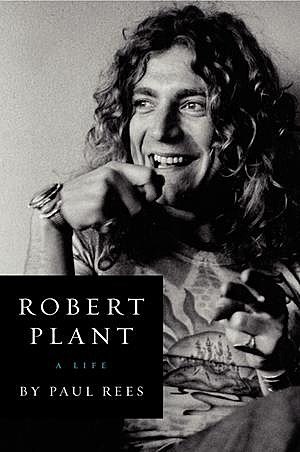
To celebrate the 39th anniversary of the release of Led Zeppelin‘s double-album masterpiece ‘Physical Graffiti,’ we are pleased to present an exclusive excerpt from ‘Robert Plant: A Life,’ a biography by author Paul Rees that reveals some fascinating insights about the group’s singer while tracing his life from childhood to present day.

The selection we chose captures the band at the height of the collective creative powers, but also a time when fame, addictions and interpersonal disputes were starting to leave them a bit frayed around the edges. We hope you enjoy it as much as we did, and encourage you to check out the rest of the book:

Neither the setting up of (record label) Swan Song nor the chaotic production of their film distracted Led Zeppelin from the business of making their next record. In the spring of 1974 they retired for a third time to Headley Grange. [Jimmy] Page retained a room in the freezing house but the others chose to be sequestered nearby at a plush country hotel. Not coincidentally, the mobile studio parked on the lawn on this occasion belonged to Ronnie Lane of the Faces – a cheaper alternative to the Rolling Stones’ studio they had previously used.

During the creative boom of the last four years enough songs for two records had been stockpiled and they elected to use them all. Since the band were now filled with a sense of their own importance, this much was inevitable. The double album was then perceived as being a defining artistic statement, one that had already been made by the Beatles’ “White Album,” the Rolling Stones’ ‘Exile on Main Street,’ Bob Dylan’s ‘Blonde on Blonde’ and, just the previous year, the Who on ‘Quadrophenia.’ Of course, Zeppelin would have to join the pantheon.

They worked fast, cutting the majority of the songs in one or two takes. 15 tracks in all, eight dating as far back as the spring of 1970 and the rest written in recent months. Sound engineer Benji LeFevre was present throughout the sessions. “There were moments of musical genius,” he says. “As a unit it was like… Phew! There was the most amazing bond, certainly when I began working with them.

“Yet there were also times when it all stuttered to a halt. We took farm animals up to the first floor and let off flares. Complete madness. Everything stopped for several weeks when one of the roadies, Peppy, drove Bonzo’s new car — a BMW 3.0 CSl — into a wall. Bonzo was so upset about his pride and joy that he wanted to kill Peppy, who hid in a wardrobe for 36 hours.

“It was just young blokes having a laugh. The band had this belief about them then that they were untouchable — as we all do. It was all to do with testosterone and, believe me, Robert had more it it than anybody I’ve ever known.”

Still, at the edges, the fraying continued. One morning Bonham arrived at the Grange with a big bag containing 1,500 pills of the sedative Mandrax, intending to conceal them from the rest of the band by taping them to the inside of his drum heads. A member of the crew spotted the flaw in his plan, pointing out to Bonham that he had a Perspex kit.

“Like most drummers, Bonzo tended to exceed the limit more than most people would,” says LeFevre. “Sometimes he was particularly cruel to Mick Hinton — his roadie. Bonzo would punch him in the face for no reason at all.

“With Robert and Bonzo, they were so tight you couldn’t slip a piece of toilet paper between them. But Robert wasn’t afraid to go out into the world and be himself.” He’d buy a few people a drink in the pub. Whereas Bonzo would go into a pub and announce that he was going to buy everybody drinks all afternoon. Why? Insecurity probably.

“As with any group of friends, the dynamic between each of them ebbed and flowed. The relationships changed depending on the circumstances, of which there were some heavy ones. And also, I imagine, with the amount of mind-altering substances being consumed. Because then paranoia starts to evolve.”

For now, hover, none of these external forces diminished the music. The completed album, ‘Physical Graffiti,’ was the second — and last — stone-cold classic Zeppelin would make. Its fifteen tracks ran to more than eighty minutes and sprawled out across four sides of vinyl, but none of this expanse was wasted. Rather, it allowed for the setting loose of Zeppelin’s most intricate and varied collection of songs, plunging through rumbling rockers like ‘Custard Pie’ and ‘Night Flight’ and into gradually unwinding epics such as ‘Ten Years Gone’ and ‘In the Light,’ the latter’s spiraling drone stolen from the baked streets of Makkrakech. Something as decorative as ‘Bron-Yr-Aur’ or reflective as ‘Down by the Seaside’ was set alongside the primitive crunch of ‘The Wanton Song.’

Appropriately, it all sounded enormous. Conducting the orchestra through all its tremors and earthquakes, Page reached his apogee as a producer. He mixed the songs into a great rhythmic soup, basing it on Bonham’s reverberations — his drums again recorded in the Grange’s vast entrance hall — and layered multiple guitar tracks on top of these.

There was a manic zeal to the whole enterprise, through. ‘Trampled Underfoot’ cut a thrilling dash, Jones taking the inspiration for his bubbling clavinet line from Stevie Wonder. ‘In My Time of Dying’ was unrecognizable from the original blues song from which it was appropriated, Blind Willie Johnson’s ‘Jesus, Make Up My Dying Bed’ from 1927. Huge and unbending, the Zeppelin track powered along for more than eleven minutes, Page’s bottleneck guitar ricocheting off Bonham’s tumultuous fills.

Then there was the song that is perhaps their grandest achievement, ‘Kashmir.’ Page’s majestic, circling riff cast it out across a cool desert night and into Jones and Bonham’s driving rhythm, and on through all the mysteries and wonders of Plant’s incantations. It did not matter that Kasmir itself is, in fact, a wet mountainous region or that neither Plant nor Page had ever been there — it was the song that best captured the spirit of their wanderings.

On ‘Sick Again’ Plant looked back with a jaded eye at the tawdry scene he had last encountered on Sunset Strip, perhaps referring to Lori Maddox, Page’s teenage consort, in the line “One day soon you’re gonna reach sixteen.” Yet ‘Black Country Woman’ gave rise to more lasting examination, as Plant, in the best blues tradition, beseeched his woman not to treat him mean, before concluding, “That’s alright, I know your sisters, too.” Here was further fertile ground upon which to grow speculation about the state of relations between Plant and his wife’s younger sister, although if this were at the song’s root it suggested that Maureen Plant never listened to her husband’s records.

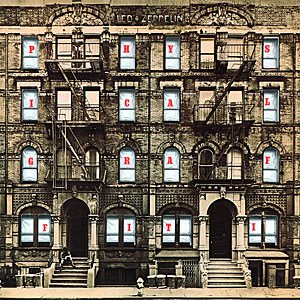
‘Physical Graffiti’ was released on February 24, 1975 in a die-cut sleeve that pictured a New York City brownstone tenement block, through the windows of which one could pick out Elizabeth Taylor, Lee Harvey Oswald and the band themselves dressed in drag. There were other big, ambitious records that year, Bob Dylan’s ‘Blood on the Tracks,’ Bruce Springsteen’s ‘Born to Run’ and ‘Fleetwood Mac’ among them, but this, the artwork alone seemed to insist, was the greatest and most imposing of all. So it proved, shipping more than a million copies and becoming the fastest-selling record in history. For now, at least, there was still no stopping them.
 

Find member

Latest posts

Forum statistics

Threads
31,576
Posts
1,126,182
Members
6,628
Latest member
Buckeye Randy

Staff online

Members online

Top