Led Zeppelin (Official Thread)

gcczep

Ever Onward...
Joined
Apr 29, 2011
Posts
4,374
Reaction score
17
Location
Between my left and right speakers...
Paging Jimmy...

Courtesy of Radio.com

Jimmy Page: The Protector of Led Zeppelin’s Legacy and His Own

"I was there before the group started, and I know exactly what was recorded."

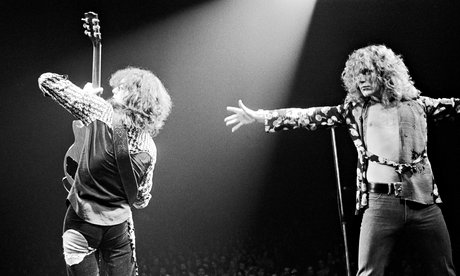
led-zeppelin-1969-bw2-courtesy-of-atlantic-records.jpg


By Brian Ives

In 2012, Jimmy Page told Rolling Stone that his primary job these days is guardian of Led Zeppelin‘s legacy. The job, it turns out, has taken up much of his time in recent years, as Page has been remastering the band’s entire studio catalog, from 1969′s Led Zeppelin through the posthumous outtakes collection Coda.

“I was the authoritative one,” Page explained to Radio.com about his role as Zeppelin’s chief archivist. “I was there before the group started, and I know exactly what was recorded.”

The remastered albums are part of a massive reissue program that pairs each original Led Zeppelin album with a second disc of extra material. The discs will also come in “super-deluxe” editions packaged with lavish coffee-table books, including era-appropriate photos and other archival material. The reissue versions of Led Zeppelin, Led Zeppelin II and Led Zeppelin III hit retailers on June 3.

During his conversation with Radio.com, Page spoke about the critical slamming Led Zeppelin got during the band’s formative years, particularly from Rolling Stone. Every negative review aimed at Zep still stings and annoys him, seemingly more now than in 1969.

“If they only had a short time to review the album, along with three or four other albums, and this is their allotted [time] because they have to get their copy to print, well, of course they would have great difficulty” with an album like Led Zeppelin, Page seethed. “And because we weren’t in the singles market, where there’s an immediate point of reference all the time, by the time the third album comes out they’re going, ‘Well, they’ve gone acoustic, because Crosby, Stills and Nash are acoustic,’ or whatever. It’s just nonsense. But it’s quite amusing!”

Page laughs as he says this, but you get the distinct impression he still doesn’t actually find it amusing. He’s a serious man.

led-zeppelin-1969-bw4-courtesy-of-atlantic-records1.jpg


Page’s former bandmates Robert Plant and John Paul Jones might entertain a few questions about the band during interviews, and they’ll likely share a few memories with a guarded smile. But when they do, it’s clear that Zeppelin is very much in their rear-view mirror.

Related: Robert Plant says ‘zero’ chance of Led Zeppelin reunion

Page, by contrast, is deeply focused on the band, and will sternly correct any fact that is slightly out of place. Speaking with Page is a bit like the live version of “Dazed and Confused”: you can’t really be sure where it’s going to go, and it could get unexpectedly harsh and dangerous at any moment. Of course, therein lies the excitement.

~

Radio.com: Is this project the last word on the Led Zeppelin studio catalog? Are these the definitive version of the albums?

Jimmy Page: I’d like to think so, because I’ve mastered and remastered right across the board. I didn’t actually master for mp3 files, but [I did for] everything else! In actual fact, there’s even files that are super-duper hi-res for whatever format may come along.

You’re ready for whatever comes in 50 years.

Who knows! But what I do know, which is something that is very clear, is that you almost have to reassess how your music is being heard, and make sure you address whatever that is. That’s something I certainly have learned. There’s 20 years since the last remastering [for CD], there’s been so many changes in the way that people hear things. I’d call [the new remastering] a necessity.

A lot of your peers, and artists who came before you, didn’t think about their legacy, or how their music would be repackaged in 10 or 20 years. But a few years ago, you told Rolling Stone that you see yourself as the guardian of Led Zeppelin’s legacy.

I’m the knowledgeable one, you know? I was the authoritative one. I was there before the group started, and I know exactly what was recorded, and I had reference mixes from the studio dates that I did. I was in the studio more times than the others, because I was the producer, you see. That’s why I had such a cache, an archive of material to be able to sort of go through. I do know the history of the band, and I do know how things were recorded and for what they were recorded, whether for a live capacity or the studio albums. Yeah, there was a responsibility to the Led Zeppelin legacy, basically because I was there, and I didn’t really want to see it messed about with.

George Martin remembers more detail about the Beatles sessions than the members, I guess that’s part of being the producer.

It really is, it would be hopeless if you couldn’t remember, wouldn’t it? Actually, I knew I had a pretty good memory and recall, but I was surprised just how detailed my memory was across those decades.

What goes through your mind when you’re working on this kind of project? This sort of started when you began work on the Celebration Day live album.

Well, it sort of started because I wanted to archive all of the material that I had that was in analog form. So, I even had tapes of my own material, early songs that I did when I was still living with my parents. As it went through chronologically, it went through to the Yardbirds things, and it got to the point where the Led Zeppelin thing started to pop up. Around the time of the Led Zeppelin DVD [released in 2003], I had an idea, I won’t tell you exactly what it was, but it did involve these things, but nobody could understand it. Nobody could understand what it was that I was saying, that includes [my] management at the time. The idea sort of resuscitated for this [project].

I don’t know whether everyone does [their entire catalog] all at once. I don’t care. What I do know is, the companion discs to each of the albums give all this sort of insight to the recording, or at least the atmospherics, it shows the work that went into the studio masters as you know them. The alternative versions and different songs that have never been heard, it’s a wonderful portal, it’s a great window in. I knew it was a hefty task to do, but knew the fans would love it when it came out, and now it is out, so great! [He checks to make sure his phone is turned off.]

Everyone wants to know: what’s Jimmy Page’s ringtone?

[laughs] Actually, it’s the same as everybody else’s, it’s the old phone ring, so you never know if it’s your phone going off or anybody else’s. Bloody nuisance, innit?

Over the years we’ve had live albums, but precious few Zeppelin studio recordings that we haven’t already heard. What made you decide that you were okay with opening up the vaults?

I knew that within my archive and the tape collection that I had, there were some real gems. I thought, “Well, now enough time has passed to be able to present this type of project and complete it and know that it’s the right thing to do.” Purely because that whole area of the studio music hasn’t [been] readdressed like the live music has. So there’s two ways of doing it. There’s sort of going back to the multi-tracks and doing all of that, or the way that I saw it, was to revisit all of the tapes that were done as alternate mixes or guide tracks, backing tracks or early stages to revisit all of those, because it’s true and faithful to the time when the album was recorded. So if you have a whole bulk of things for Led Zeppelin III, it’s great because it’s a time capsule, that’s why it works, that’s why this thing has real substance to it. So if you go to the stuff for Physical Graffiti, it’s a time capsule for that.

Did you enjoy it – did you enjoy listening to stuff that you hadn’t heard in a long time?

It was really enjoyable. It was really good to hear the musicians, John Bonham, John Paul Jones, Robert Plant, and even Jimmy Page. All just flying, absolutely flying at an altitude… there was no other group at the time that were doing that. Or could. They just couldn’t. Yeah, it’s always wonderful to hear it.

Was there anything that you’d forgotten about?

With the detailed searching, believe me, I left no stone unturned. I was even checking out whatever had come out on bootleg that had leaked out of studios in the past – not by us, I might add. But I wanted to make sure that the material that I was going to present was not out already on bootleg. And that was a successful hunt, and it was obviously the right thing to do. I knew what I was looking for. And things would crop up. “Key to the Highway” [a bonus track on Led Zeppelin III], I remembered that we had done it, I didn’t remember that Robert started singing “Trouble in Mind” halfway through it, do you know what I mean? My recall [is] of the fact that I’ve got him set up singing through one of my amplifiers through the vibrato channel, and he was playing harp. I had a good recall of it. It was still a wonderful surprise to hear it. But it wasn’t like I didn’t know I recorded it. Nevertheless, the subtleties in it were wonderful and reassuring to hear, they were really charming, they were really quite magical.

The only thing that turned up that I’d literally forgotten about, out of all of these tapes and hundred and hundreds of hours of listening was: I had an early mix, a studio mix of Presence, and that had extra material on it. And that was the album I thought, with all of this chronological opening of everything, that might present a problem, and lo and behold, there it was. It was a deliverance.
 

gcczep

Ever Onward...
Joined
Apr 29, 2011
Posts
4,374
Reaction score
17
Location
Between my left and right speakers...
Paging Jimmy Part 2

Let me ask about the first Zeppelin album. You’d spent many hours as a studio musician, you had been in the Yardbirds, so by then, did you feel ready to run your own band? You’d been through the apprentice phase by then.

Yes, when I was a studio musician, I spent my time really learning a lot. I was fascinated, as much as playing guitar, as how things were recorded. I learned a lot, I made it my business to learn a lot. Even from the very first studio date that I did, I had to be very disciplined. So I had that whole studio discipline. If you didn’t have that, you wouldn’t be seen again. I did that for two and a half years, so I was obviously pretty focused. I learned to read music during that whole period. And [to] write music.

What we were doing with the Yardbirds, especially over here [in America]…we were trapped. We had a producer [Mickie Most] who was superb for singles, but it wasn’t superb…the sort of choices he was making for the Yardbirds was like mixing oil and water. [It] just wasn’t working! It was all a bit hopeless and desperate. And I really didn’t like all of that, the singles market.

And you can see how that carries through the Led Zeppelin years. I didn’t want to get caught up in the whole AM [radio] situation, when I saw the emergence of the FM radio, where they were playing stereo and stereo albums and selected [non-single] tracks. I could see that, if you had an album with sufficient different colors and approaches to music, you’re gonna get the whole [LP] side played. I knew that in the Yardbirds. I didn’t want them to fold, I was trying to encourage them to stay together. But [front man] Keith [Relf] had just had enough of the Yardbirds, he probably had enough of the guitar changes [the band's former lead guitarists included Jeff Beck and Eric Clapton], and of different people, too. And I had to be sympathetic and respectful of that. But I sort of knew what I knew by that point. And, sure, I wanted to form a band, and I knew exactly…I had the numbers, like “Babe, I’m Gonna Leave You,” I had the whole of the arrangement and the concept of that.

Rolling Stone didn’t review the album positively.

We never got good reviews in Rolling Stone, whether it was the first album, second album, third album, whether it was a couple of concerts in L.A., all reviewed by the same guy [former Rolling Stone writer John Mendelsohn]. And they were just really hatchet jobs. But I’ll tell you something. I wanted to reproduce his articles within the framework of these releases, and Rolling Stone was alright with it — there were five reviews. And [Mendelsohn] refused to allow us to use [his name]. I wanted to use at least one of them, the first album, and have the blurred image of his name. It’s all over the Internet anyway! But the rest of the band didn’t want to do that. I said, “Aw, come on guys!”

A couple of years ago, Rolling Stone did a list of the top 500 albums of all time, and Led Zeppelin was number 29. It must feel pretty sweet that, in retrospect, that people who didn’t review you positively back then have come around.

That one reviewer in Rolling Stone, he was just poisonous, he wasn’t even worth following, as far as what his opinions were. Not as a musician, I can tell you that! As time went on, we got some good reviews on the albums, because some people actually got it. They got the idea that, because we weren’t locked into a singles market, we had more freedom to be able to explore on each album. However, there were other reviewers, and I’m giving them the benefit of the doubt here, that they weren’t just sort of trying to be clever. Actually, they were stupid. But if they only had a short time to review the album, along with three or four other albums, and this is their allotted [time] because they have to get their copy to print, well, of course they would have great difficulty. Instead of throwing all the other albums away and really just listening to what was going on on the Led Zeppelin album, they probably just didn’t have time.

And because we weren’t in the singles market [where] there’s an immediate point of reference all the time, by the time the third album comes out, they’re going, “Well, they’ve gone acoustic, because Crosby, Stills and Nash are acoustic” or whatever. And the reality of it is: yeah, but hang on a minute, the acoustic [guitar] is all over the first album and the second album. And “where’s ‘Whole Lotta Love?’” Yeah, well, you’ve got “Since I’ve Been Loving You,” and you’ve got “The Immigrant Song.” It’s just nonsense. But it’s quite amusing! [laughs]

Let me ask about Led Zeppelin II. Robert didn’t write on the first album. Was he coming into his own as a songwriting collaborator on Led Zeppelin II?

Well, look, what I didn’t want to do, was to be doing the lyrics. I wasn’t confident about my lyrics. And on the second album, where you’ve got “Living Loving Maid,” that’s a lot of my lyrics on that. There was a level of sarcasm that I knew was underneath a lot of my lyrics. This is the way I saw it – I could be misguided – but the way I saw it was, whoever was coming in to be the singer, I wanted to encourage them to write the lyrics that they would sing. Because after a while, my lyrics weren’t going to sit, by about three or four albums in, as well as if [the singer] was doing his own. So it was a really important thing to bring Robert on as a writer. It got to the point where, on “Thank You,” I got to the “little drops of rain” bit as a lyric, and he said, “I’d like to take this….” And I said, “You go ahead.” And so that’s where he had a real run on the lyrics. It’s cool, huh?
 

gcczep

Ever Onward...
Joined
Apr 29, 2011
Posts
4,374
Reaction score
17
Location
Between my left and right speakers...
Paging Jimmy Part 3

Were you impressed when you started to read the stuff that he was writing?

When Robert was really coming on with all the lyrics, it showed that he was really growing within his situation. But each and every one of us was, with our techniques, we were flying. With Led Zeppelin, I must say that each and every one of us were on the same sort of level, as far as musical abilities and technique, certainly by the time we entered the first album. Not so much necessarily beforehand. But what I can tell you is that was a tour de force for the guitar, this album, and it was meant to be so. But with all that remarkable talent of John Bonham, he never had the opportunity to play the drums like John Bonham wanted to play [them]. Can you imagine any other incarnation he played in prior to that, where he plays the drums the way he did on “Good Times Bad Times?” Of course not! He never had the vehicle to do so. And it was the same with John Paul Jones, he was a really accomplished musician, but he never had the chance to be involved in a unit like this. Same with Robert, so the excitement of it all was just infectious, and everyone was gelling together and maturing within the whole concept of this.

In It Might Get Loud, when you play “Whole Lotta Love,” Jack White and The Edge are pretty cool guys, but when you start playing that riff, they start beaming. I was wondering, when you came up with that riff for the first time, did you know, “Wow, I’ve got something here.”

Yeah, well, I knew it was really good to play on my own, it really had a sort of raunch to it. It was really good. It felt good. I didn’t know if it was really good on a universal plane, but I knew that it was gonna be fun for people to play. I didn’t think at that point that it was gonna inspire so much across decades. I mean, I’ve seen the “Whole Lotta Love” riff used in mash-ups on YouTube. With so many artists: James Brown was one of them. It’s so cool! The fact is, they’ve been inspired by hearing this riff.

Let me ask about Led Zeppelin III, was that a marked difference from how you wrote the first two?

During 1969, we just worked and we worked and we worked. Coming to America, going back to England. Actually, during 1969, we were even cutting the second album while on the road. It just didn’t stop. And even looking at the itinerary, it’s really quite exhausting looking at it. And that’s really only about 25% of what we were really, actually doing.

The tour finished in America, and then we had a break where there weren’t more concerts or recording or radio sessions. The guys could actually go and visit their families, live with their families for a little bit, see their kids. It was a cool time. I lived in the countryside, in the Thames Valley. On the third album, there was this cottage that Robert had been in his youth with his mom and dad, and he said, “Oh, it’s really a nice place, it’d be nice to go and hang out there.” I think the whole of the band were invited, but the others didn’t want to go. And they wouldn’t have gone if they knew there was no electricity there! It was log fires. It was gas lamps and all of that. It was a small cottage, it was really charming. I took my girlfriend at the time, [Plant] took his wife and daughter.

“That’s the Way” was the main song that came out of that. But I had “Immigrant Song” and “Friends” to launch the recording of the third album. The cottage, that wasn’t for very long, but nevertheless, it was a good time for going there and hanging out. It has mythical proportions as to what the cottage actually was, and what was done there. I took the same guitar there, which is a guitar that I had in the Yardbirds, an acoustic that I wrote the first album on, that I wrote the second album on. I recorded that guitar on the third album. It’s the same guitar that’s played on “Stairway.”

You can see that the acoustic guitar for me was a really solid backbone of the writing process for me, as much as the electric.

What was so important about John Paul Jones, outside of his bass playing, like his keyboards and his arranging.

I don’t know about the arranging. I arranged the Led Zeppelin material. However, when it comes to “Friends,” there’s a movement on the guitar, which I thought of that more in the sort of orchestral application of what would appear in Indian music or even Arabic, these moving string lines. And in the process of doing all this other stuff, I said, “Can you write it down?” And he did that. So he did that part of a string arrangement, but he’s only following the guitar.

What made him such a valuable member of the band?

You’d better ask him. He was a super fine musician. The performances that they [all] brought on board, and the way that everybody managed to lock into the other musicians [was something] that had not been done before in another band, or certainly in any incarnation that they’d been in before.

The importance of these alternate versions, it showcases the role of the other musicians within Led Zeppelin. It just really does. You can hear how important everybody’s contribution is. And just how everyone, apart from the fact that they locked in with this synergy, everyone’s really listening and attentive to the music as it’s going on. That’s important, and it was important to do this, to give this window, this portal into this time frame of when each album is done, and just to show how important everybody’s role is.
 

Musikwala

Popmartian
Joined
Jan 14, 2014
Posts
1,271
Reaction score
7
Location
Ontario, Canada
I was listening to the debut album on my way to work. Such a tight collection of songs!

I love that moment in Dazed And Confused when the drumming suddenly speeds up and then you hear the guitar solo. Epic song! Fantastic stuff!
 

gcczep

Ever Onward...
Joined
Apr 29, 2011
Posts
4,374
Reaction score
17
Location
Between my left and right speakers...
The First

^Yep, MW, for it's time the production work on it was new at the time. Primitive, raw yet soulful in some aspects. My favorite on it is "How Many More Times" which is so electric...
 

Musikwala

Popmartian
Joined
Jan 14, 2014
Posts
1,271
Reaction score
7
Location
Ontario, Canada
^Yep, MW, for it's time the production work on it was new at the time. Primitive, raw yet soulful in some aspects. My favorite on it is "How Many More Times" which is so electric...

How Many More Times is great! Perfect ending to a stellar album!

Oh Rosie... oh, girl. Oh Rosie, oh yeah... :D
 

gcczep

Ever Onward...
Joined
Apr 29, 2011
Posts
4,374
Reaction score
17
Location
Between my left and right speakers...
Tersera...

Jimmy Page and Robert Plant: how we made Led Zeppelin III
The baby needed bathing, the tape recorder needed batteries and the band needed cider … the veteran rockers on the classic Led Zep album that began life at a cottage in Wales

Interviews by Michael Hann
The Guardian, Monday 26 May 2014 10.51 EDT

Led-Zeppelins-Jimmy-Page--011.jpg
'Critiques of the album don't matter. What matters is whether you did the right thing …' Jimmy Page, left, and Robert Plant in 1975. Photograph: Neal Preston/Corbis

Jimmy Page, guitarist and producer
We had done a lot in 1969. We'd done six months of solid touring in America. We'd performed all over Europe. We'd also done an album on the road. It was exhilarating, but it was nice to be able to stop. We finally had the chance to slow down, and that's reflected in our third album. One of the things that was important about Zeppelin was John Bonham's drumming. I'd played with some incredible drummers in my time, but I knew instinctively that if you're going to have a three-piece band you need to have a drummer who's not just messing it all up, but with the technique to be able to fill in the spaces and allow you to have space. John Bonham knew how to tune his instruments – he'd hit that tom-tom and he'd be tuning the lower skin so that when he hit it, it would project back out again as an acoustic instrument. He had such a wonderful balance in his playing, so he could hit those accents with the bass drum or the snare – you don't want to lose any of that, you wanted all of it because it was an important part of the collective.

I think we produced something really good: a courageous album, a band standing up for its convictions, doing what felt natural without being at the beck and call of record labels or A&R men. We were able, without any hindrance, to keep pushing the boundaries.

I had already written Immigrant Song, and came up with Friends a day or two before we got together at Robert [Plant]'s house in the West Midlands. I was keen to do Gallows Pole because I had an arrangement I wanted to try, and I had Tangerine from a number of years beforehand – before Led Zeppelin.

Then Robert and I went to Bron-yr-Aur, a cottage in Snowdonia. I think Robert had been there on holiday with his mum and dad and knew it was a great place to get away from everything. He had his daughter Carmen and his wife there, and my girlfriend came, too. We had a couple of roadies staying, then the families went home and we carried on. We just had cassette recorders, and That's the Way came out of there as a complete song.

People sometimes misinterpreted my relationship with Robert. For example, not long after this, I met a Belgian girl who was giving out leaflets at Piccadilly Circus. I had a place in Scotland and was keen to take her up there: I was a pretty impulsive fellow. So I thought I might have to let her know who I was. I started to talk about being in Led Zeppelin and she said: "Did you go to that cottage in Wales?" I said: "Yeah." And she said: "You can't be Jimmy Page – he's gay." I said: "What the hell are you talking about?" And she replied that there was an inscription on the album that made Wales sound like a perfect place. I said: "That had nothing to do with any sexual conquests! It was about music!"

With Since I've Been Loving You, we wanted to do a blues track that wasn't a 12-bar, because we'd done that on the first album. So we came up with a blues in a minor key. It wasn't something that took for ever and a day: it came together very quickly and it was perfect, with its sentiment and how it was approached.

It felt right for the album to have a rocky side and a folky side – and the rocky side clearly had to start with Immigrant Song. With that hypnotic riff and Robert's bloodcurdling scream, I thought: "That's the way to open an album."

Led Zeppelin III shocked reviewers, because they couldn't see what it was all about. "Where's Whole Lotta Love?" Well, that's on the second album, thank you very much. We're moving on. Eventually, you'll get the picture. I wasn't hurt by the reviews, but I remember thinking: "OK, I won't read them any more."

Robert Plant, singer
By the end of 1969, it felt as if I was finally doing what I had to do – with the right people, too. I was a very healthy and excited young man, in an artistic environment that I could never have imagined. John Bonham [drummer] and I had spent a long, long time boring the pants off other musicians in the West Midlands, crowing on about how somewhere around the corner we were going to find what we were looking for.

And so, whatever our physical state was at the end of Led Zeppellin II, there was now only one place to go: up into the misty mountains with our families. Jimmy and I packed into an old Austin Champ with Strider the dog to do all the stuff you do when you're 21. The cottage had no electricity, no nothing. This was appropriate, since we were just trying to get some ideas down to bring back and work on. So there we were, up in the mountains with one of the very first Sony cassette recorders and a bunch of Ever Ready batteries, just sitting going: "Well, what shall we do?" Carmen was two and needed bathing. Strider needed feeding. And we needed cider.

Jimmy was much more of a man of the world than I was. He'd travelled a lot with the Yardbirds, he'd done those Dick Clark tours with the Shirelles and Little Anthony and the Imperials and whatever it was. And he was the face, so I was master at arms at that point in the development of our relationship – it was all developing before me. It was a very easygoing and very unaffected time – miraculous really.

I had no idea what I wanted Zeppelin to be at that point. I hoped we could combine acoustic and electric, which was not that easy to do live, and also lean towards that North African thing. I felt we started getting there with Friends. My wife's family were living in a part of the West Midlands where there were a lot of Gujaratis, so you heard this great music all the time around you, as well as bands from America, like Big Brother, or Kaleidoscope and their album A Beacon from Mars. We were aware of Bert Jansch, Davy Graham and early Fairport Convention stuff, too


Immigrant Song was written after we had been to Iceland. It was a cultural exchange – although who they sent over here, I can't imagine. The song was a vignette of what it was like being there. Of course, it ended up spawning generations of guys with crossed axes tattooed on their arms. It's slightly funny now.

From what little I can remember of the subsequent recording sessions at Olympic Studios in London, it was a case of using mic placement and the right engineers to capture the rawness, energy and attitude of each track. Sometimes it was a bit of a struggle, but we did things quickly and were serious about making something pretty as well as powerful. The outro of Gallows Pole is great, with all the manic singing I'd overcooked horrendously prior to that. It started having some meaning. I was learning how to syncopate. I was flourishing.

Critiques of Led Zeppelin III don't matter. What matters is whether you did the right thing, whether you were with the right people, and whether everybody was doing their best. The contributions were all heartfelt and well-founded. That was the great thing about early Led Zep.

• Led Zeppelin, Led Zeppelin II and Led Zeppelin III will be released in remastered versions with bonus tracks on 2 June on Atlantic/Swan Song.
 

Find member

Forum statistics

Threads
31,576
Posts
1,126,181
Members
6,628
Latest member
Buckeye Randy

Staff online

Members online

Top