Led Zeppelin (Official Thread)

gcczep

Ever Onward...
Joined
Apr 29, 2011
Posts
4,374
Reaction score
17
Location
Between my left and right speakers...
First steps...

Nothing too mind-blowing on the new Zep reissues but I love the raw alternate takes on probably my top two favorite Zep songs: Since I've Been Loving You and Heartbreaker.

That kind of stuff is gold. Wish they would have given some material in that vein for Zep I, instead of the third or fourth batch of live tracks from that era. Live stuff is good and all but it's far, far less unique than studio outtakes. We have lots of chances to get good live material, but on what other release will we ever get to hear studio outtakes from this album?
Yes, I'm with you on the debut LP companion disc. I would have preferred outtakes and unreleased tracks. There are alternate takes of Babe, I'm Gonna Leave You and one of You Shook Me out there. Maybe Page didn't find them interesting enough to warrant release. I have them on bootleg and the versions do sound subdued for the most part.


AboutAGirl

oh, be nice
Joined
Apr 21, 2005
Posts
2,693
Reaction score
12
I love the BIGLY outtakes and I was extra sad they got left off because my top 3 Zepp songs are SIBLY, Heartbreaker and BIGLY. Would have made a great trio to get a new version of each!

But if I recall correctly, Page had one tub full of backlog material destroyed by a leak, and another collection of that kind of material was stolen from his house. So who knows what material he does or doesn't have access to. I often wonder how outtake material even makes it onto the bootleg market. I would think that kind of stuff would be in the hands of the artists themselves, it's not like a live show where thousands of people are there to capture it.
 

gcczep

Ever Onward...
Joined
Apr 29, 2011
Posts
4,374
Reaction score
17
Location
Between my left and right speakers...
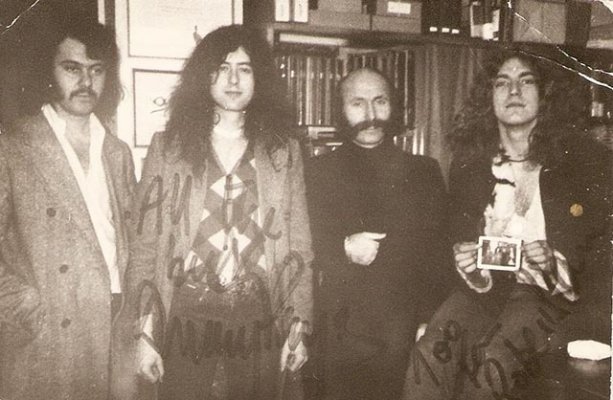
Richard Cole Part 1

Led Zeppelin's Road Manager Is Still a Badass

By John Liam Policastro
colezeppelin.jpg

I'm standing outside a Tesco gas station in London's posh Notting Hill, waiting to meet Led Zeppelin and the Who’s legendary road manager, Richard Cole. He shows up right at 6 PM with the sharp punctuality only a road manager could have. We go to the local hardware store, and with a buoyant intensity that never breaks, he declares to the clerk, "It appears my scissors have run out of power." He slams the tape-wrapped scissors on the counter. Even though Cole doesn’t have the receipt and can only vaguely remember that he bought them in November, the clerk doesn’t hesitate to give him a new pair.

It all happens so fast that at first I thought he was actually stealing them. He shouts for me to hurry up as his crimson suede loafers peel back out onto the road. Cole never stops moving.

Cole grew up in postwar London and—like many other children of his time—became enamored with the rock 'n' roll music that had slowly seeped over the Atlantic in the late 50s.

In 1961, at age 15, he left school to begin working as a scaffolder in North London and immersing himself in the local mod scene. "We were the first and the best. We were the true mods, my mates and I," Cole says at dinner, once I finally get him to sit still.

In late 1963, on the cusp of the British Invasion, Cole became fascinated with the local music scene at the famed Marquee nightclub and the nearby nightlife at a bar called the Ship. It’s there that he had what was perhaps his first important revelation: "There was no pussy in the scaffolding business."

One night, while watching local group Herbie Goings and the Night-Timers break down their gear after a gig, he asked if they were looking for a manager.

"I badgered them to death,” Cole tells me, "and lied through my teeth about my knowledge of the business. Most importantly, I had my license—driving the band and gear was the most important task of the day." Cole got the job, and his teeth remained sunk in the jugular of rock 'n' roll for the next 40 years.

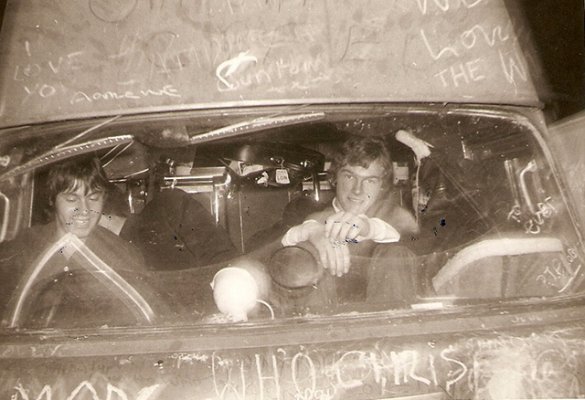
Having proven himself with the Night-Timers and on the search for the next gig, he was offered the position of road manager for two bands: Mersey Beat and the Who. In perhaps Cole’s best lapse in punctuality of all time, he asked for the Mersey Beat gig a few days late—the job had already been taken. So he accepted the gig with the Who. It was 1965, and Cole wasn’t even 20.
colewho.jpg

Cole fondly recalls his early days with the Who as they'd storm up and down the UK, playing five shows a week. "They were like nothing else on this earth. There still isn't anything like them, and there never will be. The music, the style, the presence—they had it all. All lovely boys, but being with Keith and John was a laugh a minute," he recalls with distant eyes and a wild smile. This was the golden age—before the hard drugs became prevalent. "It was all Purple Hearts [Dexamyl] and alcohol then."

Cole remained with the band for a year, noting their 1966 performance at the NME Pop Festival with the Beatles, the Rolling Stones, and the Yardbirds was a landmark gig to witness. In fact, Cole only lost the job when he lost his license for speeding to one of the Who’s many gigs.

Inspired by a trip to America with the New Vaudeville Band in 1967, Cole moved to New York City and was managing Vanilla Fudge by 1968—a year he declares to be maybe the best time of his life. It was in America where he met some of his favorite people of all time—the wild groupies of NYC.

"They were these crazy chicks—crazy in the best way possible,” Cole tells me. “Fantastic girls! They would take care of the boys in every way imaginable. Most importantly, they would take them around the city to the top clubs, and do their laundry—most of the boring work I'd have to do, so they'd save me time, and I would get to hang out."

Shortly after managing the Jeff Beck Group, Cole began managing Beck's old band, the Yardbirds, for their last tour—now featuring a little known session player named Jimmy Page. Not long after the Yardbirds’ final show on a flatbed truck in 1968, Cole once again found himself in the right place at the right time—Page's new band, Led Zeppelin, was forming and was in need of a road manager.

Although he had only officially been in the music business for fewer than five years, it didn’t take long for Cole to realize that he was witnessing one of the greatest rock bands in the history of the world take shape. "About four shows into that first tour of 1968–1969, I realized Led Zeppelin was an exceptional band—simply brilliant musicians."

Cranking out one classic record after the next, the only thing that grew faster than the riotous crowds was the hedonistic excess that would come to define both the band and Cole. It has been said that much of the mayhem and madness surrounding the band in those days could be directly attributed to Cole—a claim he nonchalantly dismisses as he slices into a meatball with his fork. "I like to say that I never got into trouble. Rather, I would find myself in trouble. It was all so spontaneous then. Most importantly, it was all so much fun."

Led Zeppelin were bona fide rock gods by 1973, when they began one of the most successful (and controversial) tours of their career—a tour that later went on to partly inspire Cameron Crowe's movie Almost Famous.

After Zeppelin's performance at New York's Madison Square Garden, the night's box office receipts—totaling roughly $203,000—famously went missing from their hotel’s safe deposit box. Cole was the last man to hold the money and the only one in the entourage with the key.

Suspicion was quickly cast over Cole, though the band and their management stood firmly behind him. But Led Zeppelin's word was no good to the FBI, who swiftly arrived at the hotel, pounding on his door to question him. "I greeted them with a bottle of Dom Pérignon and offered them a glass, but of course they declined," Cole recalls with a chuckle. "They had me take a lie-detector test, which of course I passed. And that was that. Actually, they were really nice guys, given the circumstances. We ended up suing the hotel and got a lot more money back. Funny how that works."

Growing tired of hotels on tour, Cole decided it would be a great idea to rent a "dude ranch" for Zeppelin’s week off—but they would never get to stay that long. The ranch owner, he recalls, was looking at them with disgust the moment they arrived. "He had his old lady on the porch next to him and a ****ing Bible in his lap, so I knew we weren't going to get on that well."

After a few days of nonstop partying and an endless stream of women, an argument finally boiled over between Led Zeppelin and the ranch owner. It reached a near-deadly climax when the rancher pulled a shotgun and trained it on Cole. "We were done with the dude ranch."

The band and their roadies piled into their cars to make their escape. Running out of precious time and not wanting to stick around to be fitted for handcuffs or a toe tag, Cole floored his car straight through the rickety ranch gates, and the band successfully escaped down a dirt road straight for the airport as the sheriff sped to the scene.

 

gcczep

Ever Onward...
Joined
Apr 29, 2011
Posts
4,374
Reaction score
17
Location
Between my left and right speakers...
Richard Cole Part 2

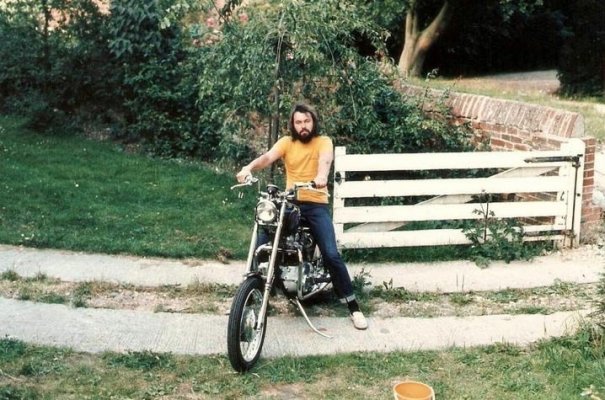
colebike.jpg

As Zeppelin continued to rage on throughout the 70s, so did their festering drug and alcohol habits—and Cole found himself in the iron grip of opiates. One of his first wake-up calls, he tells me, came on September 6, 1978.

That night, the Who's Keith Moon was invited as a guest of Paul and Linda McCartney's to a preview of the film The Buddy Holly Story. Cole also attended, and later they went out for dinner. Cole stresses that, at this point, Moon was trying to dry up and had been sober the entire evening. "It was actually quite a normal night, a real nice evening. Keith seemed fine—no drink or anything. In fact, it was I who left early to get my gear and fix.”

The next morning, Cole received news that Keith Moon had taken an accidental overdose of pills and died in the same flat Mama Cass had passed away in, four years prior. "Shock isn't even the right word,” he tells me. “There are no words still. My poor, sweet friend was gone forever."

The writing was on the wall for Cole, but it just wasn't legible enough for him to read. During what turned out to be Zeppelin's final European tour, in 1980, Cole was officially fired from the longest-running job he had ever held. In his first attempt to turn his life around, he headed to Italy for detox, but it didn’t exactly go as planned. The Red Brigades, an Italian left-wing terror group, bombed a railway station, and Cole was unbelievably mistaken as a member of the group and arrested.

"I'd been in Italy for only a little bit, but I had already gotten quite a nice tan and had a big beard—I fit the description." He spent the next six months in an Italian jail, though—as any working-class Londoner would do—he made the best of it. "The food was actually wonderful. I could even get roast lamb and baked potatoes by special order, because I had money."

While in jail, Cole received news that his longtime friend John Bonham had drunk himself to death. "It was all the more painful because I was stuck in jail… There was nothing I could do. I just had to sit there and take it the best I could. It was odd, because I remember thinking if it was going to be any of them dying, it would have been Page. He was quite thin and sickly-looking at that point, and he was also battling nasty demons himself." To further fuel his misery behind bars, Cole learned that his home had flooded, resulting in the loss of many valuables—including his entire record collection, which he estimates to have been roughly 2,500 records. "I don't even own any records now, nor anything to play them on. What's the ****ing point?"

After his release, Cole returned to England, where he continued his nasty drug and alcohol problem. Down and out and in need of money, he amazingly returned to scaffolding—20 years after he had left that world for rock 'n' roll. But the straight job didn’t turn him straight. “I was still drinking and doping at that point. You could say I was high up on the beams and only getting higher."

I remark on what an ironic arc that is for a life, but Cole dismisses the idea. "I suppose it would have been, if I had died up there—but I wasn't dead yet. I certainly wasn't done with life."

In late 1985, Cole took his final drink in a pub. "I was not even halfway done with a pint when I heard this voice say, ‘All right, Richard, that's enough, isn't it?’” He placed the glass on the table and hasn’t had a drink since.

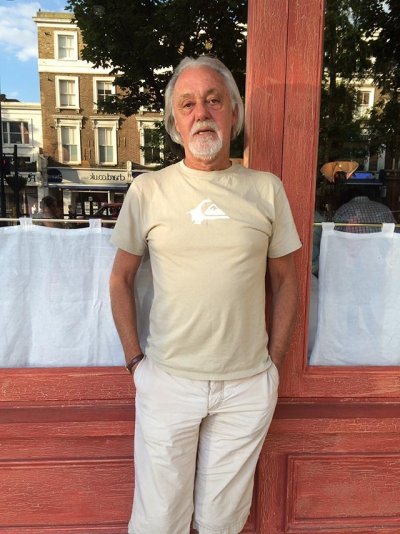
coletoday.jpg

The rock ‘n’ roll life came knocking again in 1986, when Black Sabbath found themselves in need of a manager. "They asked me if I was looking for a gig and if I could still throw a mean left hook. I said yes to both and was off again." He notes that Tony Iommi was the only original member of Black Sabbath at this point, and they were not doing as well as they had been. "What a ****ing band they are. Just ****ing monstrous. Geezer, Tony, and Bill were just an absolute powerhouse, but I really have to give credit to Ozzy for their success. He was an absolute natural. Sabbath wasn't making much money at that point. Ozzy was making a ton of money, but when you put them all together they make a ****ing fortune!" Tours with Ozzy Osbourne, Eric Clapton, and Lita Ford carried him into the 1990s, where he settled down to live in Los Angeles.

Possibly to make amends with the ghosts of his past, Cole also became a licensed drug and alcohol counselor. Cole still sporadically returns to tour managing, working for acts like Fu Manchu, the Gypsy Kings, and even Crazytown. He’s almost surprised when I tell him I think that Crazytown is easily the worst band in the history of music. "Work is work," he shrugs.

The mention of John Entwistle, the Who’s bassist and Cole’s childhood friend, sends a pained look on Cole’s face before I can ask if he was surprised to hear of Entwistle’s cocaine-induced heart attack in 2002. "You're always surprised," he tells me. His eyes water briefly and he looks up to the ceiling. "He was a lovely guy, the Old Ox. I knew him since I was 18. We all lived at our mum's in those days. We'd go and pick each other up and have a riotous good time. You don't just make friends like that. I miss them all terribly."

Nearing 70 and with three stents in his chest and 50 years of memories—some of which will be captured in the book he's writing about his mod years—Cole doesn't have much room to care about current music. "These bands today, they’re all people who have gone to university—posh boys who only seem to be into it for the money and not the fun. Back then, we were in it for the fun. There was no ****ing money! For ****'s sake, Bonzo was a bricklayer when Zeppelin started! He was even apprehensive about leaving that job to go out with Zeppelin. What does that tell you abut the musicians of today? Those boys knew ****-all about the business. They just worked their asses off until they had a hit record."

Though living a relatively quiet life, he still does manage to see his old friends—he had been out with Robert Plant the week before, and last spoke to Jimmy Page a few months ago as he put the finishing touches on the Led Zeppelin re-issues. He even excitedly tells me he is off to hang out with Steven Tyler the following day. We exchange stories about seeing the Rolling Stones on this most recent tour as well. The restaurant at this point has come to a full hum with evening diners filing in to the point that we are almost shouting in each other’s faces. He has another appointment, and we prepare to say our goodbyes. Cole asks me if there is anything more that I would like to know. I don’t want this conversation to end—with his gray, slicked back hair, neatly trimmed beard, and khaki shorts, he reminds me of my own father. I lie and tell him I think that’s enough.

With that same affable energy and wide smile on his face, he shakes my hand. "All right, John, lovely to meet. Please keep in touch." He is ten feet away by the time he finishes the sentence—those crimson suede loafers are already peeling up the road.
 

gcczep

Ever Onward...
Joined
Apr 29, 2011
Posts
4,374
Reaction score
17
Location
Between my left and right speakers...
Good Times Bad Times Part 1

Good Times Bad Times

Modern rock didn’t start with Dylan or the Beatles. It started with Zeppelin.

By Jack Hamilton

140617_CBOX_Led.jpg.CROP.promo-mediumlarge.jpg

It is early 1969, and you are young. You hold in your hands an LP by a band with a strange name. The cover art is a black-and-white photo of the Hindenburg exploding, cropped and retouched to resemble some *******, Nazi apocalypse. You remove the record from the sleeve and place it on your turntable. The sound of a guitar explodes into your ears, two quick bursts of a Fender Telecaster, each lashed to a violent drum hit: BOM-BOMP. The next two minutes and forty-some seconds roll by like an avalanche, intricate webs of guitar and bass, thundering percussion, a 20-year-old vocalist belting lines like “I know what it means to be alone” with a flamboyance that makes it impossible to believe him. When it all ends you grab the needle and move it back to the record’s edge, to confirm all this is real, and it all begins again. BOM-BOMP.

We have Led Zeppelin to blame for Creed; we have Led Zeppelin to thank for the White Stripes.

That twin blast of an E chord (of course it’s E) is the opening sound of “Good Times Bad Times,” the first track on Led Zeppelin, which would soon be known as Led Zeppelin I once Led Zeppelin decided to name their next two albums after themselves as well. In 1969 it was as powerful a shot across the bow of pop music as the “one two three fuh!” that had kicked off “I Saw Her Standing There,” the glowing Wurlitzer that had opened “I Never Loved a Man (The Way I Love You),” the blinking, blaring tritone that had heralded “Purple Haze.” It was the sound of a new world being born, and the louder sound of an old world being destroyed.

Led Zeppelin, Led Zeppelin II, and Led Zeppelin III have recently been given deluxe reissues by Atlantic Records. Each package contains a remastered version of the original album, along with a generous helping of bonus tracks. The first boasts a live set from a concert in Paris in 1969 (which has been floating around the Internet for years) while the second two include collections of rough mixes from the sessions from Led Zeppelin II and Led Zeppelin III, respectively.

The remastering is pretty superfluous: These are, and always have been, three of the most perfect sounding rock albums ever made. The rough mixes of II and III, though, are a revelation, casting light on Jimmy Page’s immense talents as a producer and giving us the opportunity to rediscover this band as they were, four absurdly gifted young people making music together, as opposed to the rock deities they’d forever after be imagined as. You can hear Page’s pick scraping string on a demo-ish “Whole Lotta Love,” Robert Plant feeling his way through an early pass at “Ramble On,” Bonzo counting the band back in on a skeletal version of “Moby Dick,” the careful interplay of Page’s acoustic and John Paul Jones’ mandolin on a rough cut of “Gallows Pole.” Listening to the ragged life behind these recordings reminds us, on the one hand, that four guys made these records. It also reminds us, on the other, that four guys made these records. Sometimes being made human only heightens your immortality.

140616_CBOX_LedZepBlue.jpg.CROP.promo-mediumlarge.jpg

Led Zeppelin’s legacy is fittingly long and fittingly loud. Depending on your preference in white male hagiography, “modern” rock music is often said to have started with Dylan’s “Like a Rolling Stone,” or Sgt. Pepper, but these myths are wishful, and overly fanciful: Modern rock music started with Led Zeppelin. Their influence, for better and worse, over all that’s come since is singular. Punk in the 1970s was a rejection of their pompous pretentiousness, metal in the 1980s an affirmation of their excesses, grunge in the 1990s a reclamation of punk that often sounded a lot like Led Zeppelin. We have Led Zeppelin to blame for Creed; we have Led Zeppelin to thank for the White Stripes. They were a band loved by millions, but if you were smart, or just cool, you probably hated them. Led Zeppelin lifted popular music to new heights of opulence and ambition and in doing so made people fear for its future. They were a microcosm of age-old anxieties about music and commerce and youth and race and sex: if the music of the ’60s—Motown, the Beatles, Stax and Muscle Shoals, Woodstock—brought unprecedented consensus, Led Zeppelin brought something like the opposite. Forty-five years later, we live in their aftershocks.

* * *

Led Zeppelin was an idea before they were a band, and that idea was always huge. Jimmy Page was a former skiffle prodigy who by the mid-1960s had made himself into one of the top session guitarists in England, playing on hits ranging from Donovan’s “Sunshine Superman” to Petula Clark’s “Downtown.” In 1966 he joined the Yardbirds (enjoying a cameo in Antonioni’s Blow-Up), but the band was already on its way to breaking up. Page conspired to form a “supergroup” with ex-Yardbirds guitarist Jeff Beck and the Who’s John Entwistle and Keith Moon. Someone (Entwistle or Moon) joked that the idea would go over like a lead balloon—a “lead zeppelin.”

The lineup didn’t stick but the joke did. When Page recruited a singer from Birmingham named Robert Plant, a ferocious drummer named John Bonham, and a bassist and musical polymath called John Paul Jones to join his project, they dropped the A from the first word out of fears that Americans would mispronounce it “leed zeppelin.” Led Zeppelin signed with Atlantic Records, the legendary R&B label that had made superstars out of Ray Charles, Otis Redding, and Aretha Franklin, for an unprecedented six-figure advance. Led Zeppelin was the first significant band to emerge from a post–British Invasion world and effectively reversed its trajectory. They conquered America before even bothering with their home country: Led Zeppelin was released two months earlier in the States than it was in England, and on an American label to boot.


For a band so fundamentally associated with the 1970s, it’s startling to remember that Led Zeppelin came out seven months before Woodstock, eight months before Abbey Road, 11 months before Altamont. Much like Never Mind the Bollocks, Here’s the Sex Pistols or Straight Outta Compton, Led Zeppelin was an enormously important album that wasn’t an entirely great one. It had two exquisite tracks (“Good Times Bad Times” and the nastily brutish “Communication Breakdown”), but much of the rest was uneven and bloated, alternately half-baked and overbaked. The album’s centerpiece was the six-and-a-half-minute “Dazed and Confused,” a morass of shrieking chromaticisms and asinine misogyny. It would quickly become one of the band’s most iconic works, stretched to 20 or 30 minutes in concert, replete with gongs, vocal histrionics, tricked-out guitars played with violin bows.

“Dazed and Confused” is a lousy song, the musical equivalent of plastering a horrific tragedy on your album cover and then asking your art department to make it look more like an erection. For the band’s detractors, “Dazed and Confused” was an easy metonym for everything wrong with Led Zeppelin: loud, overlong and oversexed, plagiarized (“Dazed and Confused” had been originally recorded by American folksinger Jake Holmes in 1967; Led Zeppelin changed just enough to avoid crediting him).

And from the beginning, those detractors were vocal. One of the well-worn saws of Led Zeppelin lore is that they were universally loathed by the critical establishment. Like so much about the band, this is a partial truth that’s been exaggerated in the retelling. Plenty of critics liked Led Zeppelin and plenty more politely tolerated them (the British press were particularly enthusiastic—New Musical Express breathlessly declared them “a blitzkrieg of musically-perfected hard rock that combines heavy dramatics with lashings of sex into a formula that can’t fail to move the senses and limbs”). What is true is that a certain very influential contingent of writers hated them. Specifically, Rolling Stone magazine hated Led Zeppelin and hated them during a period in which the publication was consolidating its reputation as the world’s most influential organ of rock journalism. Critic John Mendelsohn, reviewing Led Zeppelin for RS in 1969, lamented the album’s “weak, unimaginative songs” and “prissy Robert Plant’s howled vocals,” and sniffed that Page’s foursome was a long way from filling the shoes of the recently disbanded Cream.
 

gcczep

Ever Onward...
Joined
Apr 29, 2011
Posts
4,374
Reaction score
17
Location
Between my left and right speakers...
Good Times Bad Times Part 2

Like all narcissists who love to tell you how little they care what other people think of them, Led Zeppelin cared deeply about what other people thought of them. One of the most interesting aspects of the band’s early career is how carefully they seemed to be reading their own negative reviews: If these were rock gods in the flesh, the flesh was thin-skinned. English fans might open a copy of Melody Maker and find a fawning interview with Jimmy Page in which the guitarist would nonetheless take a detour to complain, in striking detail, about a negative review of a Led Zeppelin concert published in the paper a few weeks back.

Led Zeppelin II arrived in October 1969, a mere nine months after Led Zeppelin, an incredible feat given the band’s grueling touring schedule. Led Zeppelin II opened with “Whole Lotta Love,” which became the band’s first proper “hit,” peaking at No. 4 in the States in early 1970. Today “Whole Lotta Love” is so famous that it’s easy to forget that it’s probably one of the stranger singles to scale the upper heights of the Billboard charts. For starters, it’s not much of a song: There are no chord changes to speak of, and the “bridge” is an extended interlude that sounds like someone faking (?) an orgasm in a haunted house. The rest of the track is just a guitar riff supplemented by Plant intoning lame pickup lines. And the pickup lines aren’t even his: The lyrics to “Whole Lotta Love,” originally credited to Page and Plant, are blatantly lifted from Willie Dixon’s composition “You Need Love,” a theft redressed only after Dixon took the band to court.

(It’s worth pausing to marvel at the unbelievable stupidity of this. For starters, “You Need Love” was first recorded by Muddy Waters in 1962, as the follow-up to his hit “You Shook Me”—which Led Zeppelin had covered on their previous album. Secondly, Dixon wrote some great lyrics in his day, but these certainly aren’t them, unless you think the opportunity to rhyme “coolin’,” “foolin’,” and “schoolin’ ” is worth being hauled to court over. The “Whole Lotta Love” plagiarism was a failure of ethics, execution, and just plain good taste.)

Page was overrated as a soloist, but guitar solos are almost always overrated; his best work was everywhere else.

All that said, “Whole Lotta Love” is Led Zeppelin at their most essential. It’s big, loud, riff-driven, not terribly bright, and probably twice as long as it ought to be. It’s also an incredible piece of music that creates a five-minute cauldron of volume, rhythm, and sex about as effectively as anything ever has (and so many things have tried). It instantly became the iconic track of Led Zeppelin II, which was predictable but also a bit of a shame, as it eclipsed the enormous strides the band made elsewhere on the album. “What Is and What Should Never Be,” was an actual song, with structure and dynamics and intelligence and everything else Zeppelin wasn’t supposed to be doing, and “Ramble On,” which boasted an exquisite guitar arrangement by Page and a jaw-dropping bass performance from Jones, showcased the band’s increasingly peerless musical abilities.

Like the band’s first album, Led Zeppelin II was produced by Page, and it marked his full emergence as one of the great studio architects in popular music. Every sound captured on the album is extraordinary: Instruments swoop between stereo channels, the bass and drums blend perfectly against each other, Plant sounds like he’s in the room with you even when he’s off singing about Middle Earth. And the guitars—good lord, the guitars. Page is frequently compared to British blues counterparts like Eric Clapton and Jeff Beck, but he’s really the descendent of another mainstay of the 1960s British scene: Jimi Hendrix. Only Hendrix had such a similarly effortless grasp of the guitar as a palette of sonic possibility, a conduit to new auditory worlds. The riffs on “Whole Lotta Love” and “Heartbreaker” and “Moby Dick” sound so familiar to us that we forget that nothing had ever really sounded like them before. Page was overrated as a soloist, but guitar solos are almost always overrated; his best work was everywhere else.

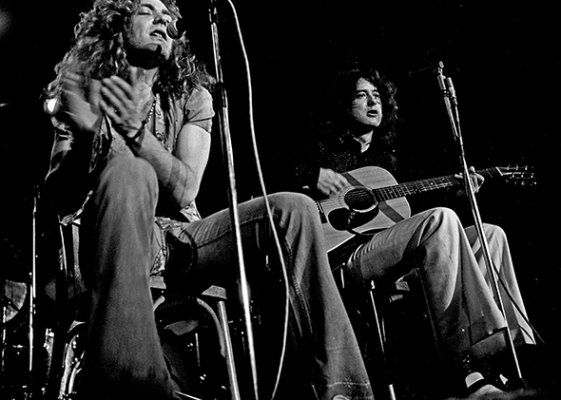
140617_CBOX_Led3.jpg.CROP.original-original.jpg

Led Zeppelin II was a commercial smash—it knocked Abbey Road off the top of the charts in the States—but it failed to change the hearts and minds of the band’s critics. Rolling Stone’s notorious trashing of the album, again penned by Mendelsohn, is very funny, very mean, and very wrong, and even its tongue-in-cheek praise of Page as “the absolute number-one heaviest white blues guitarist between 5’4’” and 5’8” in the world” is downright slanderous—Page is 5’11”. But in the review’s contempt we see a new narrative emerging, that Led Zeppelin were simply the next and worst generation of blues plunderers, the limit case of white opportunism. At least Jagger and Janis had been reverent. Couple this with the plagiarism escapades, and accusations of wholesale cultural larceny abounded.

The problem with Led Zeppelin was never really what they’d stolen from the blues, but what they hadn’t: economy, wit, taste.

Again, there were some elements of truth to this: Led Zeppelin had a relationship to the blues (and black music generally) that could veer between brilliantly creative and stupidly abusive, sometimes within seconds. “Bring It On Home,” the last track of Zeppelin II and one of the best cuts on the album, is nearly destroyed before it gets started by an interminable intro that’s little more than a smirking, down-home grotesque.

But Led Zeppelin weren’t a minstrel show—they were something so much weirder. To suggest that all they did was steal from the blues is an insult to the band, but also to the blues. Zeppelin’s appropriations could be bereft of ethics, but they were more often just bereft of logic: Here was a band that wedded Robert Johnson-isms to plots borrowed from Tolkien novels with no sense of incongruity, or embarrassment.

The problem with Led Zeppelin was never really what they’d stolen from the blues, but what they hadn’t: economy, wit, taste. And it’s worth noting that these accusations predominantly circulated among white male rock writers: The line between Led Zeppelin violating the blues and Led Zeppelin violating certain people’s beliefs about the blues was rarely a bright one.

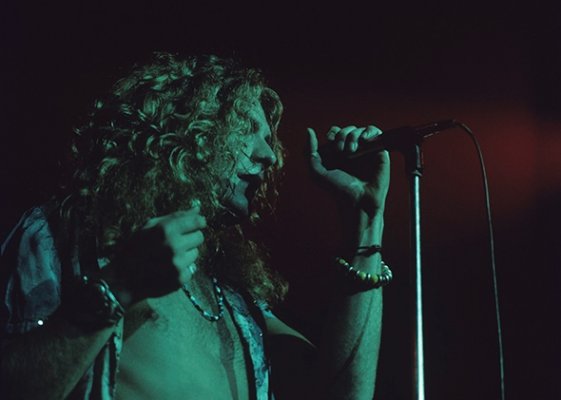
140617_CBOX_Led2.jpg.CROP.promovar-medium2.jpg
 

Find member

Latest posts

Forum statistics

Threads
31,575
Posts
1,126,164
Members
6,628
Latest member
Buckeye Randy

Staff online

Members online

Top