Richard Cole Part 1
Led Zeppelin's Road Manager Is Still a Badass
By John Liam Policastro
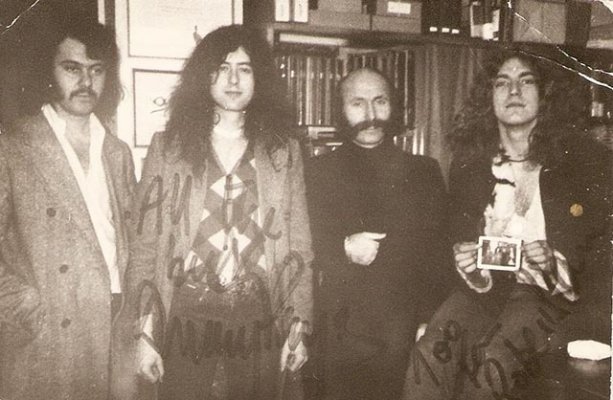
I'm standing outside a Tesco gas station in London's posh Notting Hill, waiting to meet Led Zeppelin and the Who’s legendary road manager, Richard Cole. He shows up right at 6 PM with the sharp punctuality only a road manager could have. We go to the local hardware store, and with a buoyant intensity that never breaks, he declares to the clerk, "It appears my scissors have run out of power." He slams the tape-wrapped scissors on the counter. Even though Cole doesn’t have the receipt and can only vaguely remember that he bought them in November, the clerk doesn’t hesitate to give him a new pair.
It all happens so fast that at first I thought he was actually stealing them. He shouts for me to hurry up as his crimson suede loafers peel back out onto the road. Cole never stops moving.
Cole grew up in postwar London and—like many other children of his time—became enamored with the rock 'n' roll music that had slowly seeped over the Atlantic in the late 50s.
In 1961, at age 15, he left school to begin working as a scaffolder in North London and immersing himself in the local mod scene. "We were the first and the best. We were the true mods, my mates and I," Cole says at dinner, once I finally get him to sit still.
In late 1963, on the cusp of the British Invasion, Cole became fascinated with the local music scene at the famed Marquee nightclub and the nearby nightlife at a bar called the Ship. It’s there that he had what was perhaps his first important revelation: "There was no pussy in the scaffolding business."
One night, while watching local group Herbie Goings and the Night-Timers break down their gear after a gig, he asked if they were looking for a manager.
"I badgered them to death,” Cole tells me, "and lied through my teeth about my knowledge of the business. Most importantly, I had my license—driving the band and gear was the most important task of the day." Cole got the job, and his teeth remained sunk in the jugular of rock 'n' roll for the next 40 years.
Having proven himself with the Night-Timers and on the search for the next gig, he was offered the position of road manager for two bands: Mersey Beat and the Who. In perhaps Cole’s best lapse in punctuality of all time, he asked for the Mersey Beat gig a few days late—the job had already been taken. So he accepted the gig with the Who. It was 1965, and Cole wasn’t even 20.
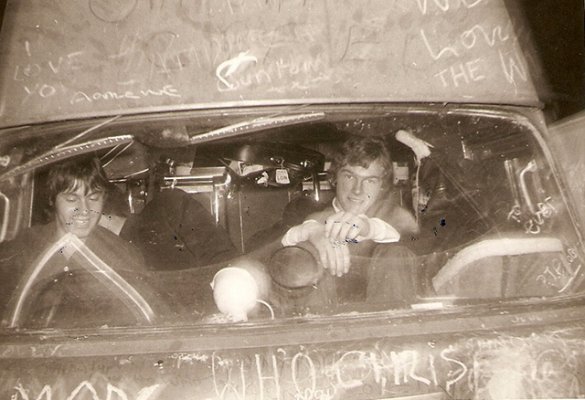
Cole fondly recalls his early days with the Who as they'd storm up and down the UK, playing five shows a week. "They were like nothing else on this earth. There still isn't anything like them, and there never will be. The music, the style, the presence—they had it all. All lovely boys, but being with Keith and John was a laugh a minute," he recalls with distant eyes and a wild smile. This was the golden age—before the hard drugs became prevalent. "It was all Purple Hearts [Dexamyl] and alcohol then."
Cole remained with the band for a year, noting their 1966 performance at the NME Pop Festival with the Beatles, the Rolling Stones, and the Yardbirds was a landmark gig to witness. In fact, Cole only lost the job when he lost his license for speeding to one of the Who’s many gigs.
Inspired by a trip to America with the New Vaudeville Band in 1967, Cole moved to New York City and was managing Vanilla Fudge by 1968—a year he declares to be maybe the best time of his life. It was in America where he met some of his favorite people of all time—the wild groupies of NYC.
"They were these crazy chicks—crazy in the best way possible,” Cole tells me. “Fantastic girls! They would take care of the boys in every way imaginable. Most importantly, they would take them around the city to the top clubs, and do their laundry—most of the boring work I'd have to do, so they'd save me time, and I would get to hang out."
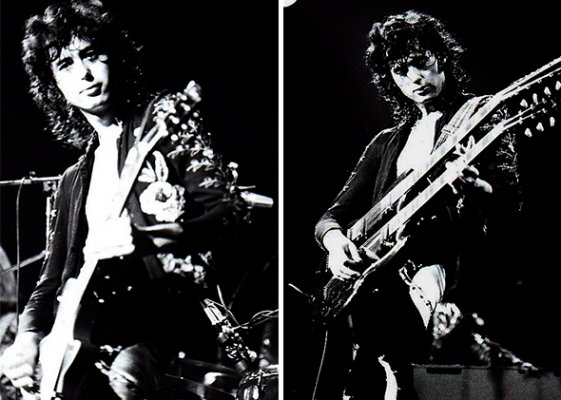
Shortly after managing the Jeff Beck Group, Cole began managing Beck's old band, the Yardbirds, for their last tour—now featuring a little known session player named Jimmy Page. Not long after the Yardbirds’ final show on a flatbed truck in 1968, Cole once again found himself in the right place at the right time—Page's new band, Led Zeppelin, was forming and was in need of a road manager.
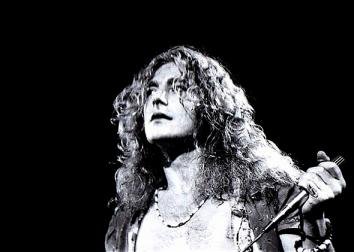
Although he had only officially been in the music business for fewer than five years, it didn’t take long for Cole to realize that he was witnessing one of the greatest rock bands in the history of the world take shape. "About four shows into that first tour of 1968–1969, I realized Led Zeppelin was an exceptional band—simply brilliant musicians."
Cranking out one classic record after the next, the only thing that grew faster than the riotous crowds was the hedonistic excess that would come to define both the band and Cole. It has been said that much of the mayhem and madness surrounding the band in those days could be directly attributed to Cole—a claim he nonchalantly dismisses as he slices into a meatball with his fork. "I like to say that I never got into trouble. Rather, I would find myself in trouble. It was all so spontaneous then. Most importantly, it was all so much fun."
Led Zeppelin were bona fide rock gods by 1973, when they began one of the most successful (and controversial) tours of their career—a tour that later went on to partly inspire Cameron Crowe's movie Almost Famous.
After Zeppelin's performance at New York's Madison Square Garden, the night's box office receipts—totaling roughly $203,000—famously went missing from their hotel’s safe deposit box. Cole was the last man to hold the money and the only one in the entourage with the key.
Suspicion was quickly cast over Cole, though the band and their management stood firmly behind him. But Led Zeppelin's word was no good to the FBI, who swiftly arrived at the hotel, pounding on his door to question him. "I greeted them with a bottle of Dom Pérignon and offered them a glass, but of course they declined," Cole recalls with a chuckle. "They had me take a lie-detector test, which of course I passed. And that was that. Actually, they were really nice guys, given the circumstances. We ended up suing the hotel and got a lot more money back. Funny how that works."
Growing tired of hotels on tour, Cole decided it would be a great idea to rent a "dude ranch" for Zeppelin’s week off—but they would never get to stay that long. The ranch owner, he recalls, was looking at them with disgust the moment they arrived. "He had his old lady on the porch next to him and a ****ing Bible in his lap, so I knew we weren't going to get on that well."
After a few days of nonstop partying and an endless stream of women, an argument finally boiled over between Led Zeppelin and the ranch owner. It reached a near-deadly climax when the rancher pulled a shotgun and trained it on Cole. "We were done with the dude ranch."
The band and their roadies piled into their cars to make their escape. Running out of precious time and not wanting to stick around to be fitted for handcuffs or a toe tag, Cole floored his car straight through the rickety ranch gates, and the band successfully escaped down a dirt road straight for the airport as the sheriff sped to the scene.